

Raised on the Big Island of Hawaii, Babatunji learned to dance by watching a Krumping documentary and YouTube videos on repeat with a few of his friends. Then in high school, he saw a performance by LINES Ballet that left him in awe, hoping to one day access the movement that Alonzo King is known for—a compelling fusion of ballet and contemporary dance embedded with each artist’s individual flare.
After a year and a half with LINES Ballet’s Training Program and nearly a decade working with Alonzo as a company dancer, Babatunji knows LINES inside and out. During our interview, we discussed forgiveness, facing adversity, expectations, his mom, musicality, and more. Read on to learn about this incredible man whose mission centers on joy.
Want to see Babatunji perform? Experience his artistry during our Fall Season (October 12–15) at YBCA, featuring exquisite moments from repertoire spanning 24 years. Season tickets are available at cityboxoffice.com/lines.
Interview by Erin McKay | Videos by Jamie Lyons
How did you get into dancing?
Who are some of the people who impacted your character?
My wife, Charmaine Butcher, has had a great impact on me. I always prided myself on being the most loving person; I would actually challenge myself to find the most loving person I could and learn to love more than them. But Charmaine helped me to quiet all of that competition. She taught me how to really love myself and treat others how I would like to be treated.
She is an amazing mirror for me. Without her, I wouldn’t see all of the hang-ups and faults that I have, and I wouldn’t have the support to consistently face that discomfort. Charmaine has shown me that we can’t just do things on our own; we have to work with others, and we can never claim that we did something all by ourselves.

Babatunji and Charmaine Butcher
My first dance mentor, Nadia Schlosser, greatly impacted my trajectory as well. She brought my friends and me together and formed us into a hip-hop crew called Cataclysm. We performed all over the big island, and Nadia rallied the troops and got us into practices. She also taught us dance etiquette and responsibility for one another.
Then, of course, there is Alonzo King. Alonzo continues to teach me to this day. Initially, our relationship was focused on how I could become a better dancer and a better human being, and those things still persist. But what Alonzo continues to teach me today is how to challenge myself. Whenever we think of a challenge, we usually think of it as oppressive or hard, something that you have to get over. And while the difficulty is still there, I’m learning more and more from Alonzo that the real challenge is just the way in which I think about things. Subtle shifts and clicks can help a challenge become less of an obstacle. I’m usually right along the cusp of the thing that I want to embody or understand. I just have to change the way that I choose to view it or think about it.
You’ve had a long-standing relationship with one artistic director and one professional company. How has working with Alonzo changed for you over time?
How did you discover LINES Ballet?
In 2009, LINES Ballet came to Hawaii on tour. They actually led a master class at my dance studio of three years, Center Stage, but I missed it because I went to the beach on the other side of the island; the sun was out, and it was an incredible day.
My teacher Pier called me up to ask where I was, and when she found out, she said, “If you don’t get back on this side of the island by this evening to watch the LINES Ballet performance, I’m giving up on you.” So I turned to my friends and said, “I guess we’ve got to leave the beach early today.”
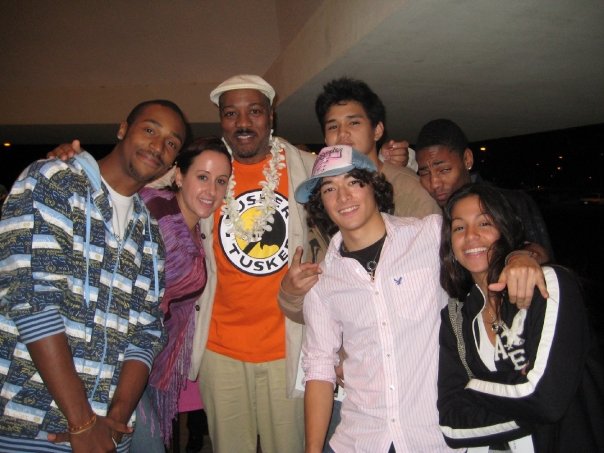
Right to left: Babatunji, his first dance mentor Nadia Schlosser, Alonzo King, and fellow Center Stage dance students Norman Hakkei, Grady Sullivan, Trey Saunders, and Rebecca Delimont together after the LINES Ballet performance in Hilo, Hawaii in 2009. This was Babatunji’s first time seeing the company perform.
During the LINES Ballet show, my mind was blown. I kept asking myself, “What are they doing with their bodies?” It kind of looked like they were doing hip-hop, popping with spastic motions, and Krumping. But they were also turning, and I knew that was ballet…Needless to say, my brain couldn’t put it all together. LINES wasn’t doing any one style. They were doing their own thing, and I had to figure out what it was.
Pier later told me, “Well, if you want to move like the dancers in LINES, you’re really going to have to learn ballet. They’ve taken ballet and are deconstructing and reconstructing it. So if you’re not proficient in ballet, you won’t even be able to keep up with them.” That moment solidified my direction. I wasn’t sure if I actually believed that I could get into LINES Ballet one day, but I knew I wanted to learn from them in some way.
You performed with Lisa Fischer to “The Black National Anthem” Lift Every Voice and Sing in Deep River, one of Alonzo King’s newer works. What does “lift every voice and sing” mean to you?
You’ve taught throughout LINES’ Education Programs. What do you try to impart to your students?
I try to teach my students at LINES how to balance the drive to do and be more with the enjoyment of what they’re doing. Because if all you do is push, and you don’t find any levity, you will get depressed. But if all you do is look for levity, you’re probably going to become complacent and not push yourself to new levels where you might find even more joy. Those are the main things that I try to cultivate in my students, along with their artistry, but I’m still trying to get better at pulling that out of them.
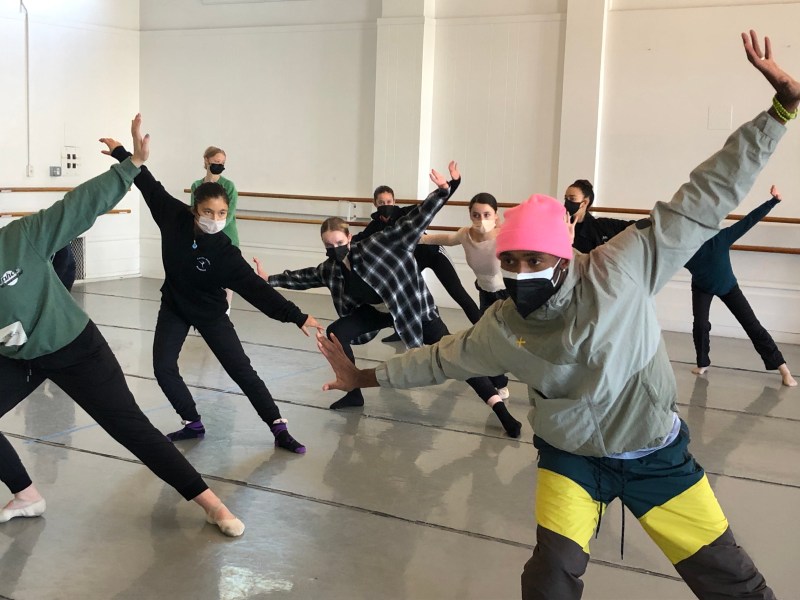
Babatunji dancing with LINES’ Discovery Program students at LINES Dance Center
We’re totally obsessed with how you interact with the music as you move! I’m curious if you think that a dancer’s musicality can be coached?
You are an alumni of LINES’ Training Program. How did you prepare for the program before joining?
Oh my goodness, I hated ballet. I really hated it. But after seeing the LINES Ballet performance in 10th or 11th grade, I knew I wanted to get better at it. So I trained really hard at my dance studio in Hilo, Hawaii, and in moments when I was slacking, my teachers at Center Stage Dance Studio (Pier Sircello, Vicky Kelly-Robbins, and Pam Chong James) focused me back in. I wasn’t the best student; I really wanted to do what I wanted to do when I wanted to do it. But, I couldn’t stand making someone else disappointed in me. So if any one of my teachers dangled the carrot of “Tunji, you’re letting us down,” I’d come back saying, “I’ll take all of the classes. Don’t worry! I’ll even take makeup classes.” That’s how they got me to really hone in on ballet and modern dance.
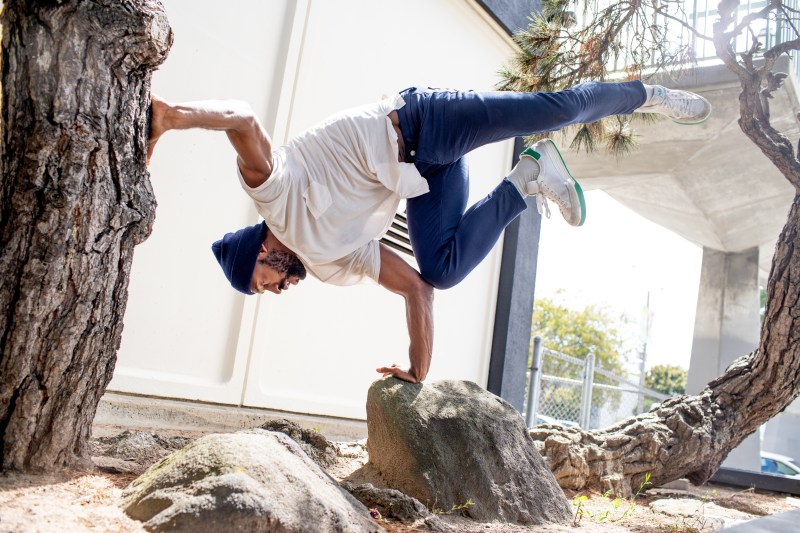
Photography: Babatunji | © Jason Thrasher
Do you think there are practical steps that we can take towards facing adversity or making our dreams come true?
How did you feel about leaving Hawaii to train in San Francisco?
I actually had cold feet right before going to LINES’ Training Program; I was so scared. I thought, “I’m someone here in Hawaii. People know me, they love me, and they’re inspired by me; I’ve got a purpose here. If I go to LINES’ Training Program, I might be bad, and no one knows me there, so I’ll have no purpose. And no one will have anything to gain from me if I’m not good.” But my mom said, “Well, if you go, everyone here will think, ‘Wow! He went to the mainland; he tried. That’s amazing! He’s so brave.’ So even if you fail, you’ll still be succeeding in so many people’s eyes. However, if you don’t go, then you’ll never know, because you never tried.” And I said, “You’re right, Mama. I hate it, but you’re right.”
We can be really critical of ourselves, and we always set the bar one bracket above what we actually achieve; my mom helped me see that, and I’m really glad she did because I learned so much at LINES’ Training Program.
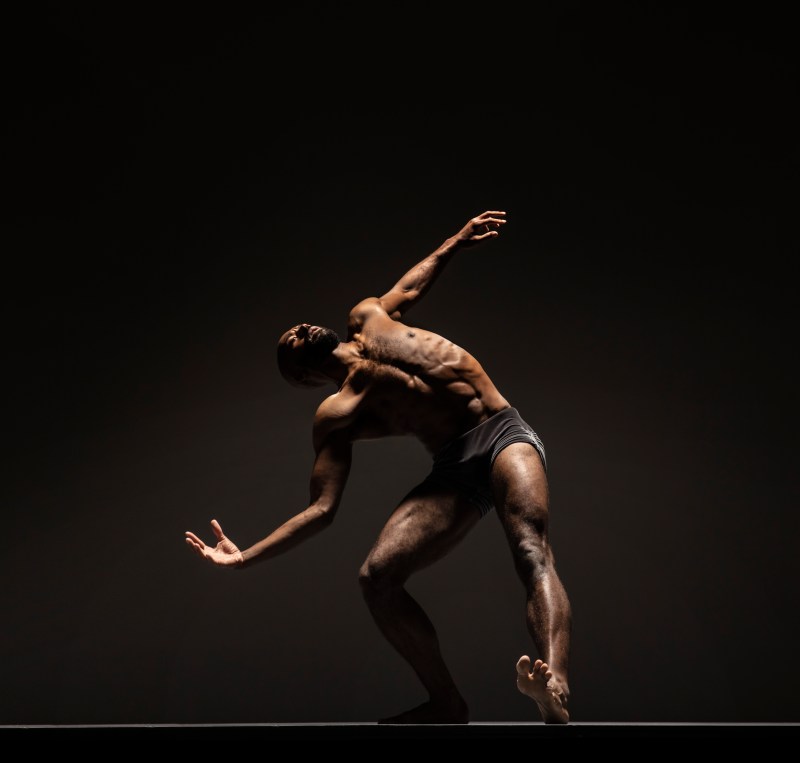
Photography: Alonzo King LINES Ballet | Dancer: Babatunji | © RJ Muna
I would have never been able to attend the LINES’ Training Program if it wasn’t for the full scholarship that Karah gave to me, and I am beyond grateful for that. I also sincerely appreciate all of Karah’s tutelage; she took me under her wing from the moment I got there, and she gave me both the coddling love and the tough love that I needed to grow and thrive. She really helped me come into myself on the mainland.
We know that you are very close to your mom. Can you share more about your relationship with her and how she has impacted you?
How did you grow, change, or develop during your time with LINES’ Training Program?
I feel like LINES’ Training Program really helped me expand my focus and pay attention to details. I was fortunate to be blessed with a lot of natural talent, but when things come easily to you, you can go on autopilot. Your nervous system does everything as opposed to you actually knowing how and why things work. I often got so intent on what I wanted to do, that I overlooked things. But Karah and the other teachers in the Training Program helped bring awareness to what I was missing. You see, we weren’t that big of a class, so our teachers really watched us. They’d tell me where my gray areas were and where I needed to zero in. Things felt very personalized in LINES’ Training Program, and that’s what I needed, because I could fly under the radar and fake things. But Karah and the teachers stopped me in my tracks and gave me insight to make sure I was working in the right way.
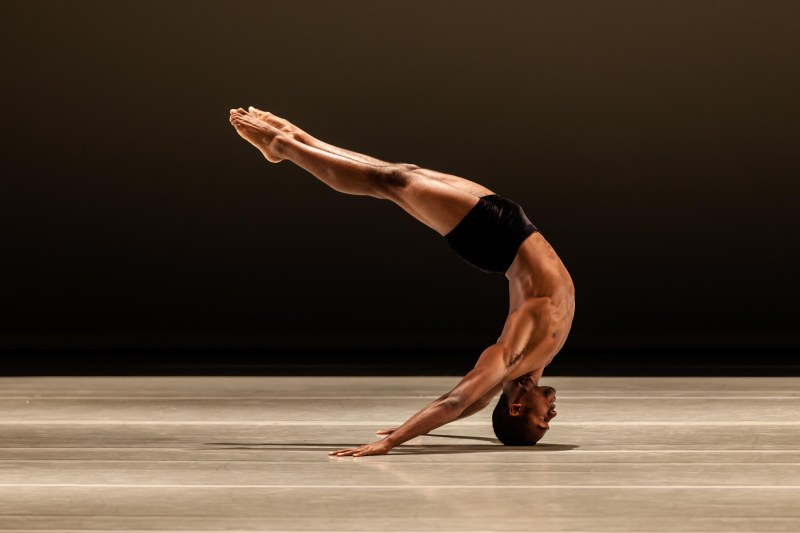
Photography: LINES Ballet’s Training Program | Dancer: Babatunji | © Quinn B Wharton
Karah and my teachers also held my hand through the process, which I really wanted. I was too proud to say it out loud at the time, but I knew that I needed to be supported. I want to be told that I am beautiful; it helps my ego take a break so I can do the work unhindered, instead of putting myself in a hole worrying that I am ugly or terrible. The teachers weren’t overly coddling of course, but they told me, “I see you, and I see what you’re doing,” It was really nice to be validated in that way. From there, they’d tell me what I could do to improve. Their approach never made me feel like I was a kid jumping up to try and get attention. I always felt pacified through receiving their support, and I was actually able to do the work, because I didn’t feel like I had to prove myself.
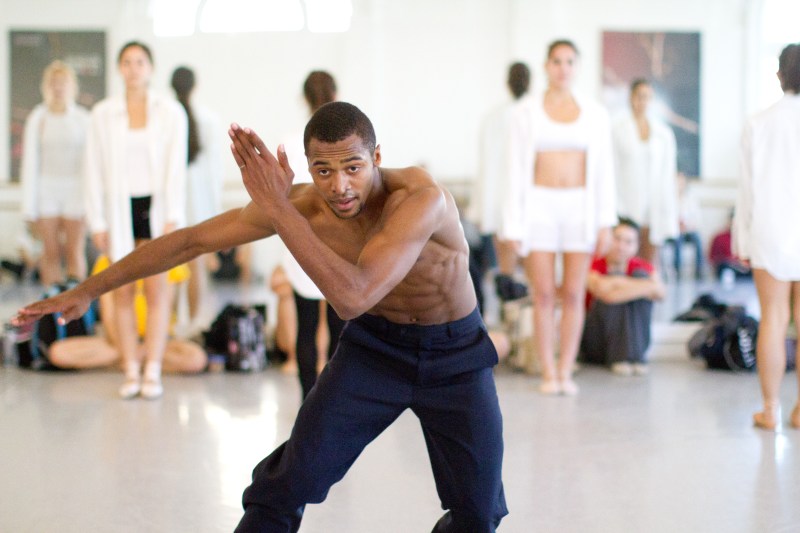
Babatunji performing in-studio at LINES Dance Center with the LINES’ Training Program
I believe the goal of LINES’ Training Program is to unlock the artist that’s inside of you first and foremost. A lot of other programs’ main aim is to get students out into the workforce. I mean, ideally you want to be working by the time you leave any program, but you want to get a job with your mind intact. LINES’ Training Program fosters students’ ideas and opinions. They got me asking, “What do I think about this?” and then they challenged my thoughts so that I learned how to back them up.
You performed for the first time with LINES Ballet while you were still a student in the Training Program. How did that opportunity arise?
Alonzo believes everything is collaboration. Even if you “independently” write a book, think about every person that impacted you and that story…
You’re collaborating with your memories at that point. Even if you’re by yourself while writing a book, you’re collaborating with experiences that you had with other people or with nature.
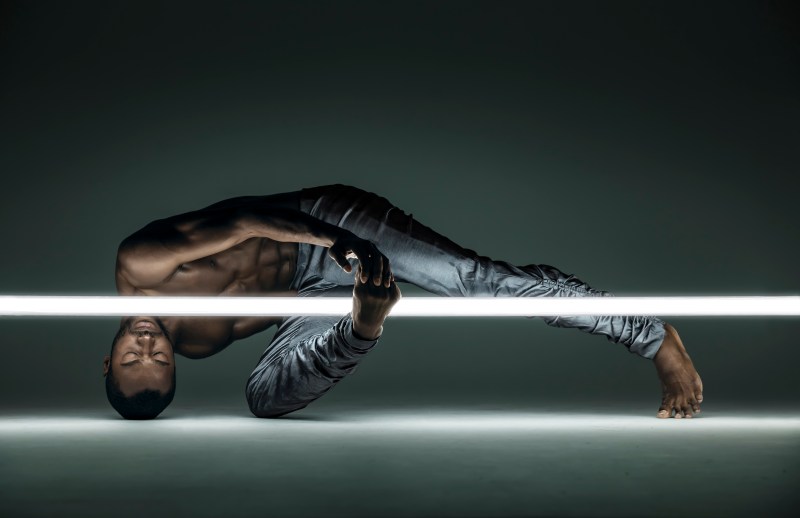
Photography: Alonzo King LINES Ballet | Dancer: Babatunji | © RJ Muna
Babatunji’s Company Audition Story
What is your personal mission?
I really believe that I can make people more joyous. My mission is to help as many people as possible feel more joy. I want them to believe they’re going to be alright, despite the hard times. I believe they will make it through and that their lives will always get better, no matter what. Even if nothing points to that being a real possibility, I hope that I, in some way, can be that possibility for someone or that spark that enables them to believe. That’s my dream and my mission.
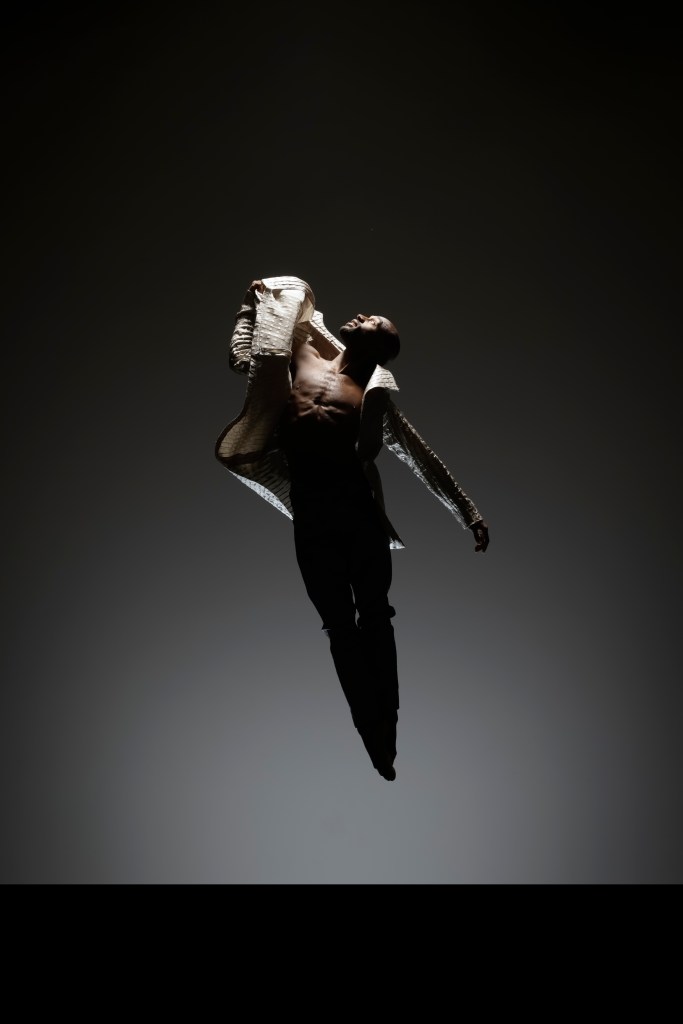
Photography: Alonzo King LINES Ballet | Dancer: Babatunji | © RJ Muna
Why do you dance today? We know why you started, but why do you continue to dance?
Banner Photography: Alonzo King LINES Ballet | Babatunji | © RJ Muna
LINES’ Fall Season
Now in its 42nd year, internationally acclaimed contemporary ballet company—Alonzo King LINES Ballet—presents exquisite moments from repertoire spanning 24 years. LINES Ballet’s Fall Season, October 12–15 at YBCA’s Blue Shield of California Theater, highlights repertoire that showcases the range of King’s works, from the contemplative and heart-wrenching to joyful and cathartic. The season seeks to answer what it means to be human through movement, music, and the power of sharing the experience together.
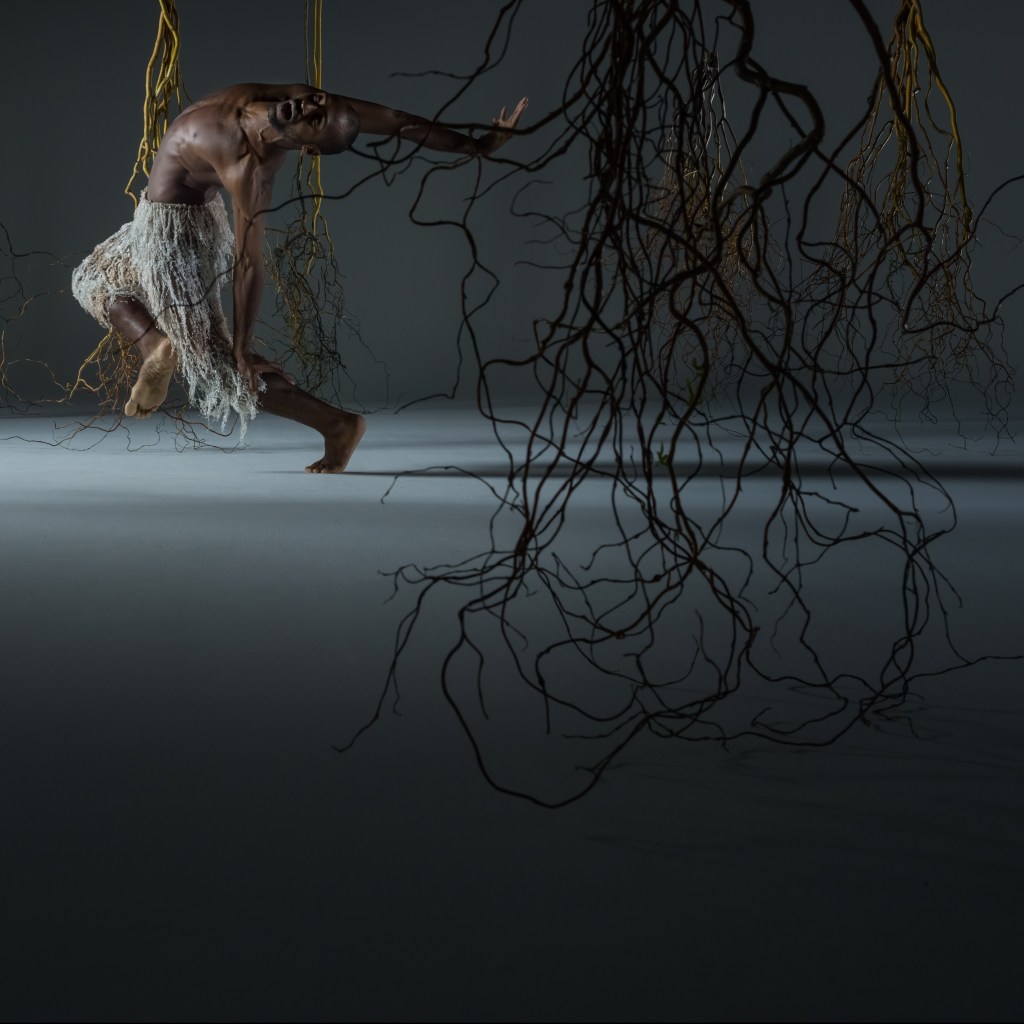
Photography: Alonzo King LINES Ballet | Dancer: Babatunji | © RJ Muna
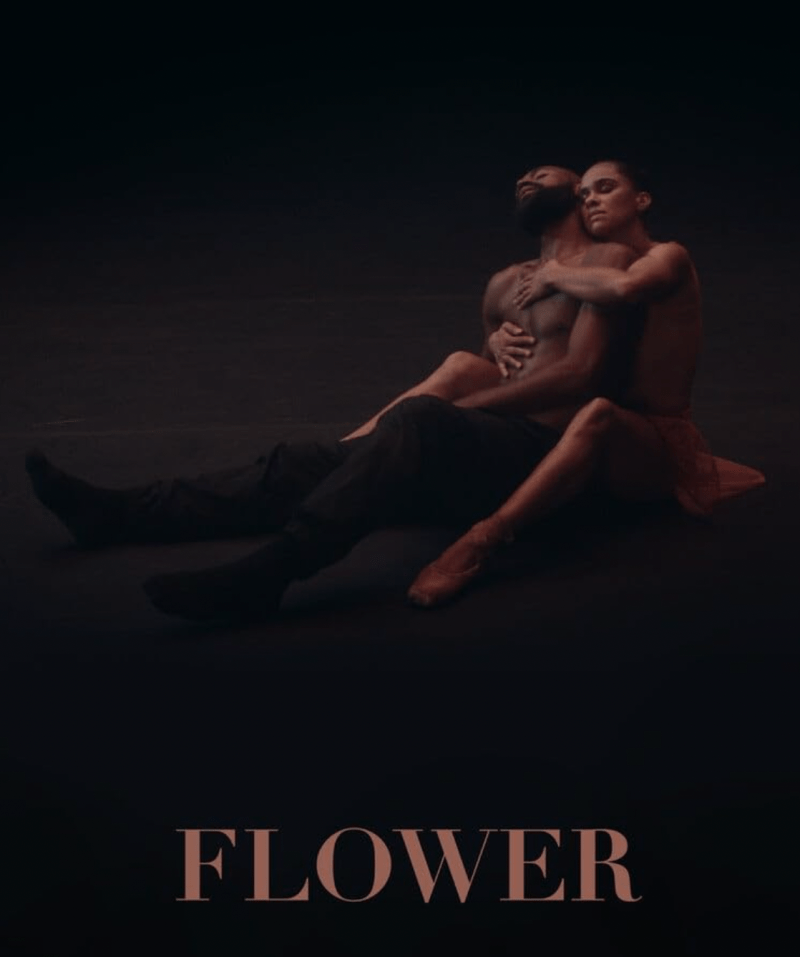
The SF Premiere of film Flower (co-starring Babatunji)
San Francisco Dance Film Festival premieres Flower, a short film series starring world-renowned ballerina Misty Copeland, co-starring LINES company dancer Babatunji, and featuring choreography by Alonzo King. Set in Oakland, the film shines a light on intergenerational equity, caretaking, and the housing crisis in the Bay Area. The program (Sunday, October 1) features a live Q&A with Misty, Alonzo, and Flower’s director Lauren Finerman. This event is SOLD-OUT, but there is an earlier screening in Oakland on September 29 at 7pm.
READ BABATUNJI’S INTERVIEW ON “FLOWER“
Photography: Misty Copeland and Babatunji | Photo courtesy of the film Flower
 LINESConnected