

Injury, introspection, and commitment all came up in our conversation with company dancer Josh Francique who joined LINES Ballet in 2022. Read on to learn about his morning rituals, how Alonzo King’s leadership helps him feel limitless, and how his childhood church inspired him to start dancing.
Want to see Josh perform? Experience his artistry in our Fall Season (October 12–15) at YBCA. Season tickets for our four phenomenal shows are available at cityboxoffice.com/lines.
Interview by Erin McKay | Videos by Jamie Lyons
Where do you think the most meaningful moments in dance happen?
When did dance shift from one of your hobbies to a career that you wanted to pursue?
I remember this moment very specifically. It happened during my second summer intensive with Deeply Rooted Dance Theater in Chicago, the company I danced with prior to LINES Ballet. I always participated in their summer programs while I was a company artist, and their programs included continuums—open forums where we could talk about dance, life, and just about everything under the sun. It was a place to express ourselves, and just get stuff out.
During that summer’s continuum, one of the dancers expressed a complication with her relationship to dance. She wanted to pursue it, but she also wanted to have a substantial life where she could take care of herself financially. The director, Nicole Clark Springer, addressed the dancer’s concern in a way that wowed me. “You can’t expect a hundred percent of the outcome if you only put fifty percent in,” she said. “You can’t straddle the fence, with one leg over here hoping that it works out and another leg over there in case it doesn’t.” That outlook sat with me.
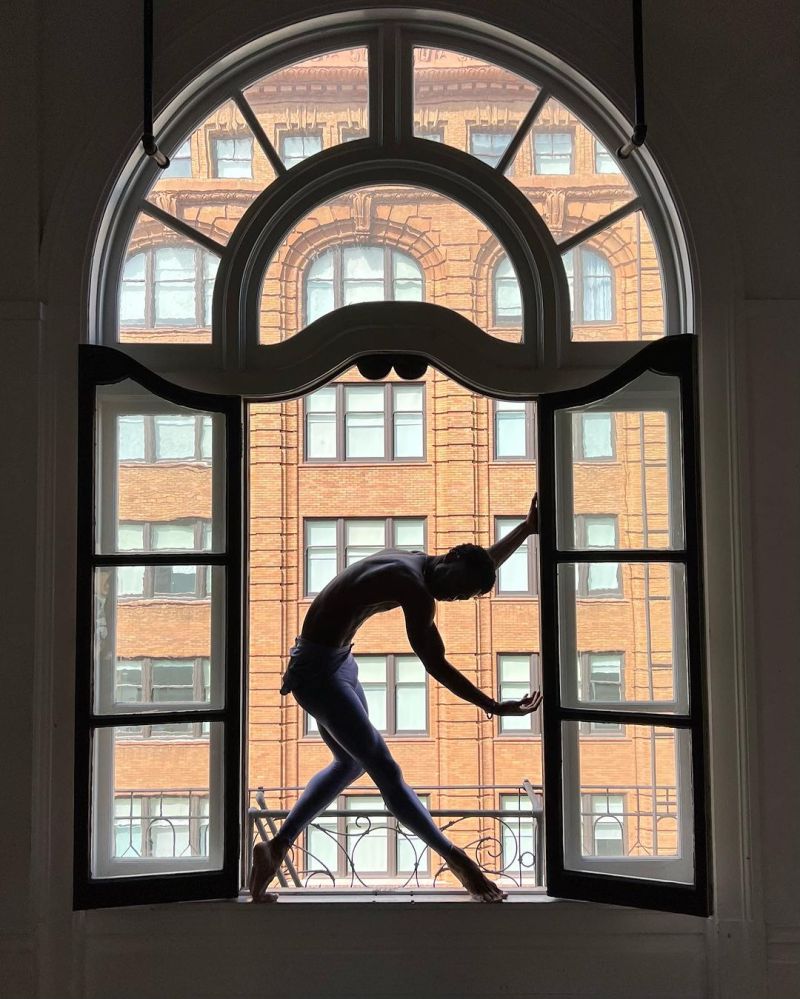
Photography: Josh Francique dancing in a window at LINES Dance Center | © Shuaib Elhassan
I decided that wherever I ended up, I was going to have a dance career, and I was going to make it as beautiful, wild, and interesting as I wanted it to be. Dance changed from a hobby to something that I was seriously going to pursue that day, and I just kept at it, hoping that it would eventually pay off. That moment changed my entire perspective and influenced how much energy I am willing to put into something, as well as the results that come out of it when I am intentional.
What was it about dance that made you want to commit to it fully, giving 100%?
What is your first memory of dance?
Dance started in the home. I grew up around music, and I always saw my relatives dancing; my mom, my dad, and my grandparents like to dance. None of them are professionals, but they all claim that I got my dancing genes from them…so shout out to them, I guess (laughs). Regardless, they definitely instilled the value of expressing myself through movement and song at a young age.
My second introduction to dance was through church. I remember going to service one Sunday on the south side of Chicago where I saw the liturgical dance ministry perform at Apostolic Church of God; I was moved by the movement. Once I was able to see dance on that level, people expressing themselves spiritually on that scale, I said, “Why not do the same?” So I joined the program, and the next thing I knew I was woven into the ministry. I did the program for a pretty long time, from about age seven to thirteen.
Was there a role model in your church ministry that influenced your view of dance?
Gloria Chapman was ministry leader of the entire program at the time. She was also a dancer at one point in her life; she taught dance to her daughters and many students. She was the one who brought the technical aspect of the dance world to the praise ministry. She always exposed us to the different styles of dance, whether it was hip hop, jazz, contemporary, or ballet. It was my first time being in a program like that; it was technically recreational, but Gloria did a great job of giving us a solid foundation. She opened my eyes to this other, technical side of movement that I hadn’t seen before.
You walked through a very serious injury. How did you navigate through the healing process, and how did your recovery intersect with your journey at LINES Ballet?
What stood out to you from your experience in LINES Ballet’s Training Program? Was there a particular teacher or insight that influenced you?
Honestly, all the faculty provided so many avenues to achieve the same ultimate goal. They wanted us to sharpen our minds’ eyes so we could approach the work with a deeper understanding of our own artistic voices; they cared about more than just the steps. But while they had a shared aim, our teachers still had different focuses. For instance, one teacher focused on the upper body and port de bras while another concentrated on the form or anatomy. They each had an in-depth way of looking at dance that I had never considered before. They pushed my limits and challenged everything I thought I knew about dance.
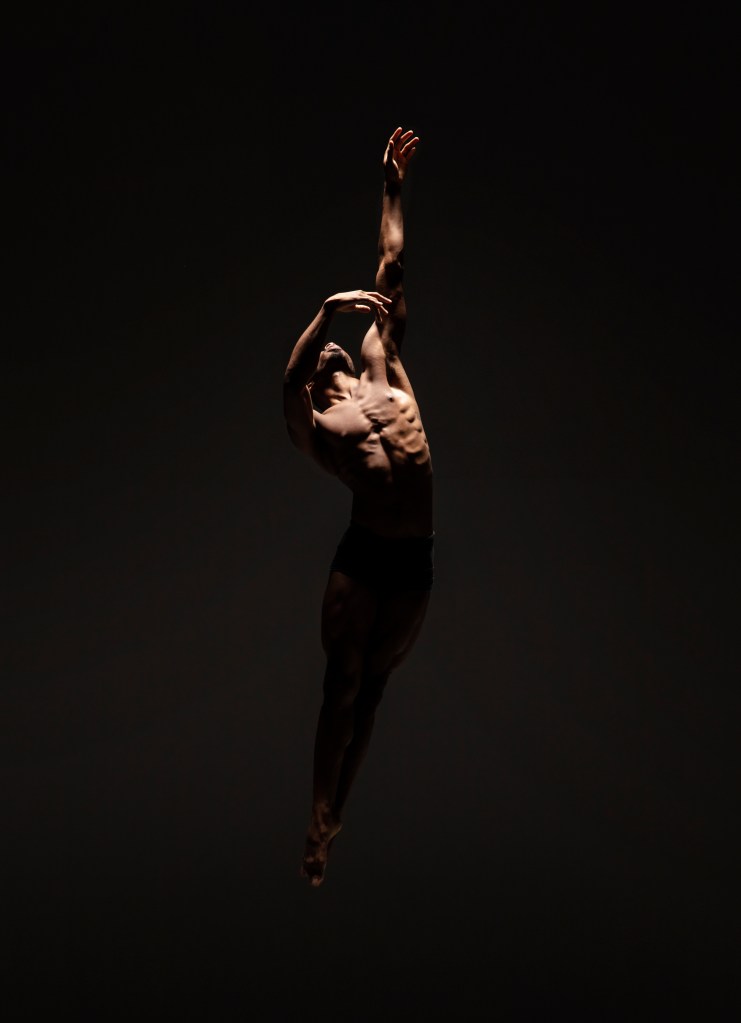
Photography: Alonzo King LINES Ballet | Dancer: Josh Francique | © RJ Muna
Additionally, LINES Ballet’s repertoire class allowed me to understand a lot about my own artistic voice. I loved the fact that we learned choreography and interpreted the movement in our own way. We were also challenged to approach the rep differently each time. The faculty gave us freedom to play with things like the movement’s timing and texture, and that encouragement was essential to my growth as a dancer.
We also got exposure to things outside of the LINES’ aesthetic in the Training Program. The program director, Karah Abiog, invited teachers who were, in their own rights, very accomplished in their style of dance. I had done pretty much everything before ballet outside of LINES, so the guest artists who worked with us in the Training Program allowed me to tap into all the different styles and genres that I had within my body. Ultimately, LINES’ Training Program helped me bring cohesion to my diverse training.
What do you think is the goal of LINES’ Training Program?
The goal of the LINES’ Training Program is to expand upon what you already have physically, and make it work for you. We all have different body types, different training backgrounds, and different things that make us unique as dancers. So how do we pull all of those differences out? How do we get to the extreme of what our bodies and our minds have to offer? We get there through the idea of more that Alonzo always talks about.
In the Training Program, we celebrate our differences, we celebrate our diversity, and we continue to push the envelope of what we, in our own uniqueness, have to offer. That’s the goal.
How did you transition from LINES’ Training Program to dancing professionally with the company?
How do you feel you have changed or grown throughout your time with the company?
I definitely feel more confident in certain areas of my dancing than I did when I got to LINES Ballet. It’s just been a non-stop learning experience; this is my first time having this much freedom with my movement, which is far different from any companies and programs that I have experienced before—but I’ve never been involved with ballet to this extreme. When I got to LINES, I wasn’t as confident in my abilities. But now I can honestly say that I feel stronger. I have a deeper understanding of what I and my body can do if I put my mind to it, which is a really nice feeling. I feel very accomplished to have come past that hurdle, and now I’m being faced with different hurdles—beautiful, but different.
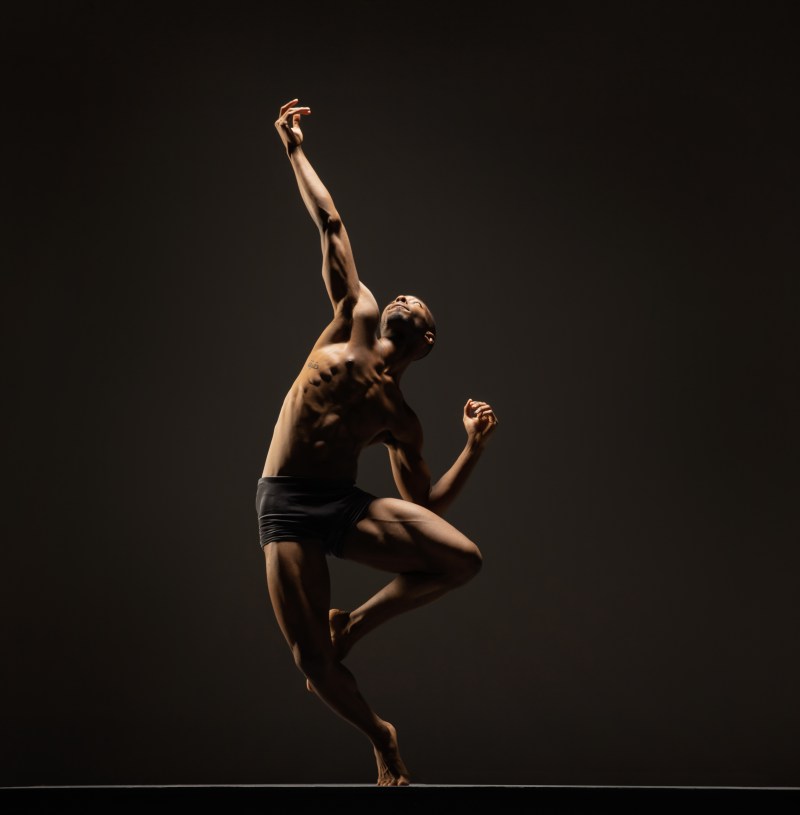
Photography: Alonzo King LINES Ballet | Dancer: Josh Francique | © RJ Muna
I also feel like I’ve grown because of the freedom that we’re allowed at LINES. I’ve had more and more opportunities to express myself artistically through the things I have to say deep inside, which is something that I didn’t always have the opportunity to do at other places. LINES gives us that opportunity. I’m asked to bring something of myself into the work, and figuring out what that looks like and feels like in a creative space has been a process for me. I’m still learning how to embed myself into choreography, but I’m enjoying the fact that I get to do it.
Can you speak about the culture of the organization and how it’s influenced you?
I think it’s great when a company like LINES Ballet has programs that branch out to student development. LINES bridges the gap between pre-professional and professional dance. They also have opportunities inside the organization that allow their alumni to come back and teach.
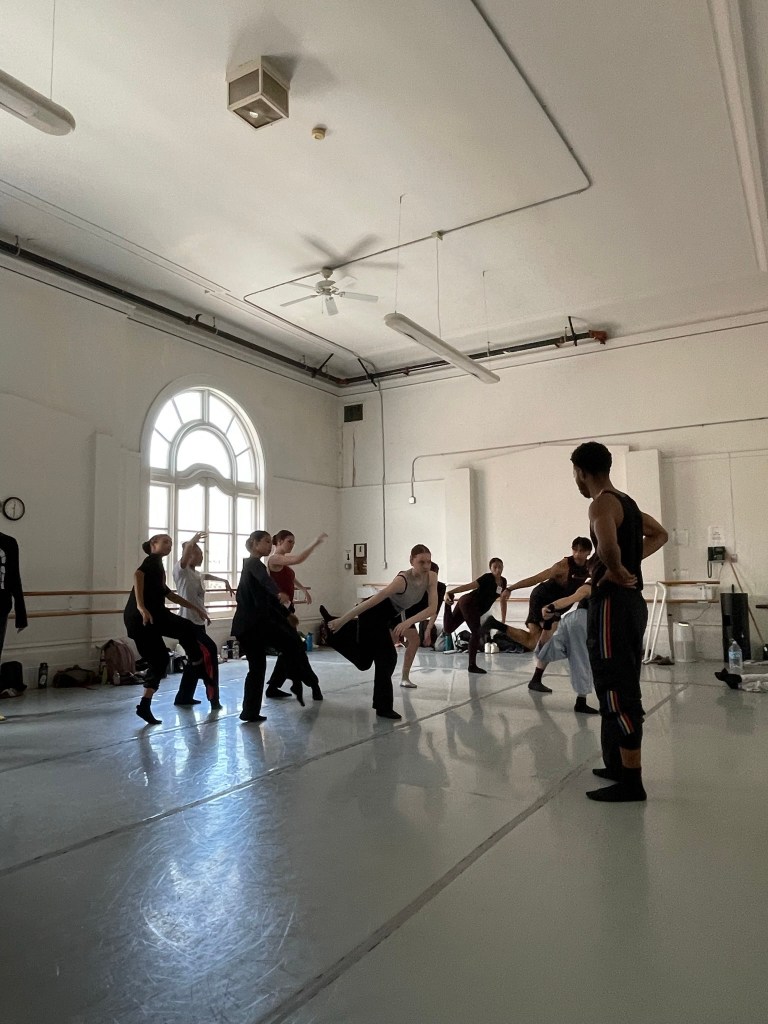
Alonzo King LINES Ballet company dancer Josh Francique working with students from the Advanced LINES Ballet Summer Program at LINES Dance Center
That is my reality: I was in LINES’ Training Program, now I’m a company member, and I just taught in LINES’ Summer Program for the first time this year. I really enjoy working with students and molding young minds. I remember how I felt when I was their age, and I believe I have relatable experiences that can help them navigate through the process. I was very grateful to give back all the knowledge that was given to me. It was a full circle moment! I think that’s a beautiful dynamic that LINES has and that it should be celebrated.
How has Alonzo’s leadership style impacted you? What are rehearsals with him like?
You mentioned that Alonzo steps back in rehearsals and allows you and the other dancers to problem solve together. Can you share a recent example of this, and what you learned from it?
When working with Alonzo, we have the freedom to interpret movement that we see and to put our own sauce on it; he encourages that. But there are also times where unison happens in the choreography, and we have to specify details. When that comes up, Alonzo tells us, “Take it upon yourself to look around the room and self-correct. Notice if you’re not doing the same arm or the same leg or if you’re on the wrong side. You should be able to figure that out amongst yourselves. Decide where the arm and foot placement is as a collective.” He believes we should be able to make these decisions on our own without him stepping in and doing it for us.

Photography: Alonzo King LINES Ballet | Dancer: Josh Francique and Babatunji | © RJ Muna
Alonzo also trusts us on a larger scale to make decisions about how we organize ourselves in a room. When it comes to spacing for a piece, we are free to look around and say, “Okay, clearly this does not look right,” and correct it ourselves. Of course, Alonzo comes in from time to time from a choreographic perspective and makes adjustments so that the work aligns with his vision. But on a whole, he allows us to make those decisions with one another as needed if he’s not there to say yay or nay. Alonzo always has the final say, but inside the process, we’re able to make decisions to progress it forward.
What small daily habits do you have in place right now? Any rituals that help you stay inspired and give you motivation for the day?
On most days, I like to get up early, so I can wake up slowly and have time to myself. I usually play music in the morning and burn a candle or some incense. I may check-in on worldly news, just to find out what’s going on, and I journal a lot to see where my head is at for the day ahead. These small things make me feel like I’m a human having human experiences outside of the four walls of the studio. Because it can get very repetitive as a working dancer, I try to do things in the morning that make me feel whole, whether it’s writing, reading a book, having a sip of coffee—which is a recent addition for me—talking to my mom, playing some music—which is what I do all day, every day—or taking a hot shower. These practices prepare me for the day and help me have a whoosah moment before entering the craziness that goes on in the studio.
Tell us more about your practice of journaling and why you prioritize it.
Journaling is a way of slowing down. I just write until I have nothing left to say. Normally, I dedicate about five to ten minutes to writing a day, but during the pandemic, I wrote faithfully for hours at a time. I would pour a hot bath, sit there, and just write pages upon pages. I haven’t done that recently, but I enjoy the beauty of going back and reading through my thoughts. Journaling gives me a way to appreciate the small things, and I don’t always notice them in the moment when I’m writing, which is why I especially like to revisit my words. As I go back through the pages, some entries make me ask myself, “What were you thinking?” while reliving others actually puts a smile on my face—at least the good ones do.
Journaling is also a way for me to see how far I’ve come and how my perspective has changed. When I read my journal, I can see the stressful things that I was dealing with before and how they are completely different from the stressful things that I’m working through now. There’s a comfort in that; I know I got over that last thing, and now I’m just at a new height with different problems.
What do you try to communicate through your work and your dancing?
Banner Photography: Alonzo King LINES Ballet | Dancer: Josh Francique | © RJ Muna
LINES’ Fall Season
Now in its 42nd year, internationally acclaimed contemporary ballet company—Alonzo King LINES Ballet—presents exquisite moments from repertoire spanning 24 years. LINES Ballet’s Fall Season, October 12–15 at YBCA’s Blue Shield of California Theater, highlights repertoire that showcases the range of King’s works, from the contemplative and heart-wrenching to joyful and cathartic. The season seeks to answer what it means to be human through movement, music, and the power of sharing the experience together.
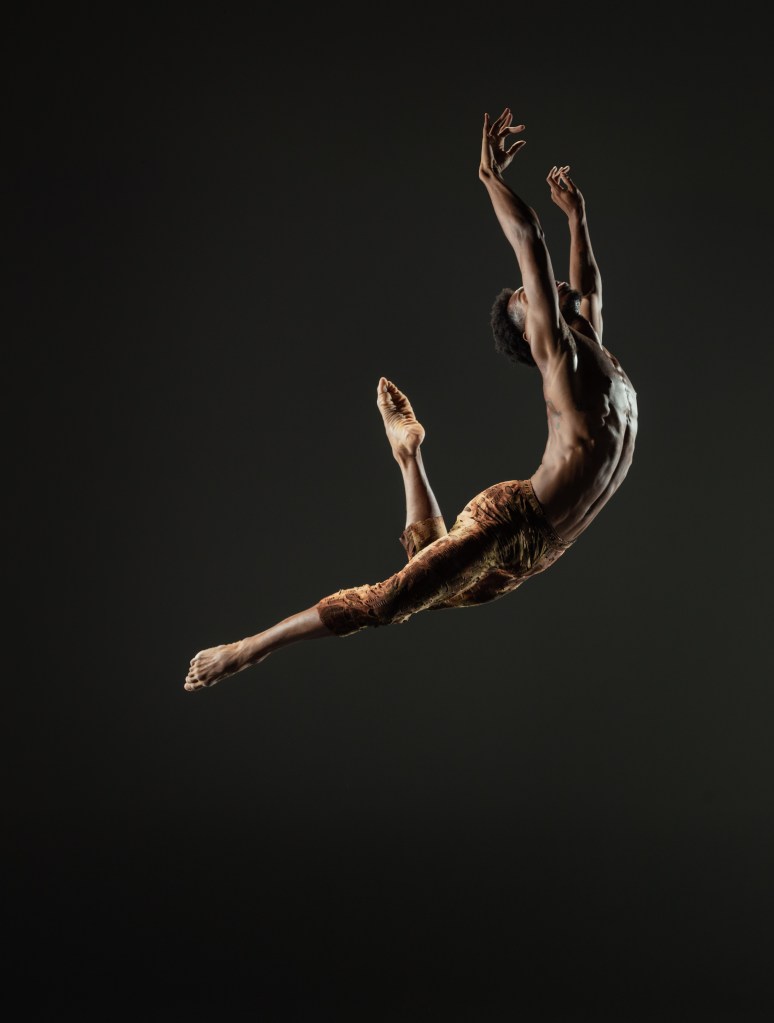
Photography: Alonzo King LINES Ballet | Dancer: Josh Francique | © RJ Muna
 LINESConnected