

We sat down with former Alonzo King LINES Ballet dancer Aesha Ash for a humorous, open, and heartfelt conversation. From her TEDx Talk on finding home to her work as the Associate Chair of Faculty at the School of American Ballet, Aesha is shaping history.
After retiring as a professional dancer, she founded The Swan Dreams Project, a non-profit that aims to change the demoralized, objectified, and caricatured images of African-American women. Her idea: to challenge and debunk stereotypes that exist for women of color by using the art of ballet. Not only does her organization’s work confront caricatures, it helps heal old wounds and inspires women to once again want to pull out their dancing shoes. As a ballet teacher, Aesha is driven with care and urgency as well. She equips her students with insights that apply far beyond the studio, many of which she learned from Alonzo.
Together, we discuss everything from motherhood to acceptance and art activism. Read on (and watch) to see how Aesha redefines what beauty and leadership can look like for generations to come.
Interview by Erin McKay | Video by Jamie Lyons
Do you think that the imagery you saw while growing up impacted your identity?


Photography: The Swan Dreams Project | Aesha Ash with community | © Richie Gunzer
What drew you to dance?
I’m glad you asked me what drew me to dance in general, not ballet specifically, because it’s probably a quicker and easier story. It really was my mom. I remember her telling me that I had a lot of energy, and I needed somewhere to put it. So my mom enrolled me in a community center dance class in Rochester, New York, located on the corner of our street. It was there that a teacher said to my mom, “This girl’s got something. She should go beyond a community center.” My mother was concerned about the investment; she wasn’t sure how much signing up for a traditional dance studio would cost. But my teacher insisted, “No, you really, really need to do this.”
It turned out that the other dance studio, Joyce Winter School of Dance, was literally one to two streets away in the opposite direction, so my mom was very lucky. And I guess the new studio instructors saw some talent in me too, because they offered us help with tuition. With that, my mom was convinced that we could do it.
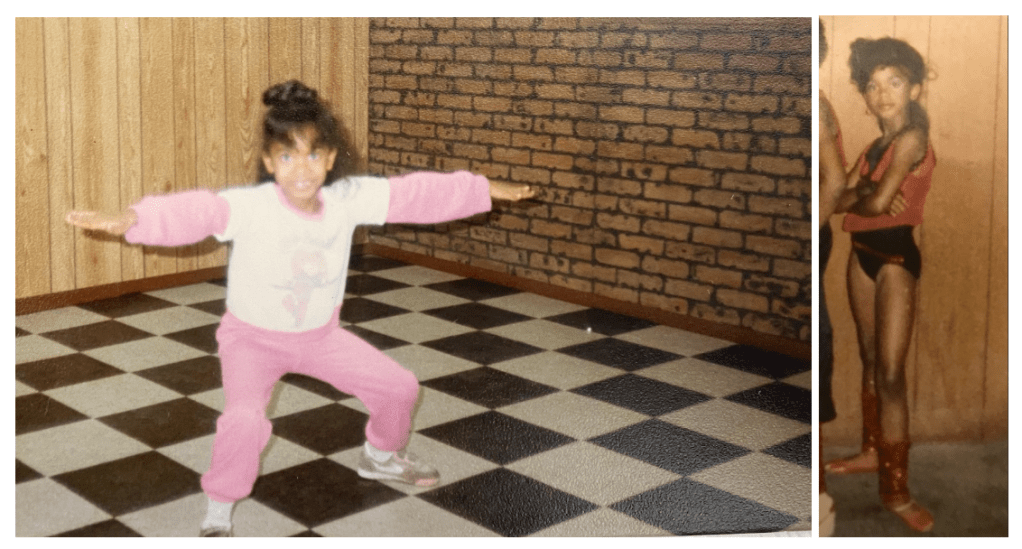
Description: Young Aesha Ash
That was my dance beginning, at a studio where we did jazz, tap, and lyrical, along with lots of competitions and recitals. At that point, I thought I wanted to do Broadway. That’s kind of what you did if you went to those studios. You idolized Cats and 42nd Street and did workshops with Frank Hatchett; that was the thing. That was my dream. I was pushing for the Broadway life, and then everything changed when I was introduced to ballet.

Photography: New York City Ballet | Aesha Ash and company dancers in A Midsummer Night’s Dream | © Paul Kolnik
How did ballet change your trajectory?


Description: Aesha Ash as a student at the School of American Ballet


Photography: New York City Ballet | Aesha Ash with company dancer | © Paul Kolnik
Why did you audition for LINES Ballet?
It was another accident. I was dancing with Bejart Ballet, a company in Europe, after I finished with New York City Ballet. While I was there, someone who was a former dancer of LINES and Bejart came to visit the company. They overheard me talking to a friend of mine who just happened to be visiting me from New York City Ballet. I mean, it doesn’t get any weirder. I was telling my friend that it was my last year in the company. I was leaving and going to audition around. At that, the former dancer turned around and said, “Sorry, did you say you are leaving Bejart?” “Yes,” I said. “It’s going be my last year.” Then, he asked me, “Where are you going?” And I said, “I don’t know. I have some ideas.” He asked if I’d heard of LINES Ballet, and I said, “I think so…they’re in the US, right?…Oh no, I don’t want to go back to the US. I want to stay here in Europe. I’m good.” But he insisted, “No, I think you should really consider it. Alonzo’s looking for dancers right now, and I think he knows you.” That surprised me. “Are you sure?” I asked. There was another black dancer in Bejart, so I brushed it off, saying, “I think Alonzo’s talking about her instead.” But he insisted, “No, I think he said he knows you.” And so I caved. “Alright, sure.” I said. “I’m happy to see. I mean…I would be jobless. So, why not?”
Alonzo called me while I was on tour in France, I believe. He talked about the company, and he invited me out. So I said to myself, “Alright, well I guess I’m going back to the US.” That’s how I found myself at LINES, where I had my life and world turned upside down by Mr. King. It was a very tough experience, but I would do it again because what I came away with… you can’t put a price on that. It’s informed my teaching, my view of artists, my movement, and my approach to classical work. Alonzo also taught me a deeper appreciation for humanity and our differences. I will be eternally grateful, eternally grateful
Description: Aesha Ash as a LINES Ballet company dancer performing a solo in Alonzo King’s MIGRATION in spring 2006
You’ve spoken about the walls that build around us, walls that try to dictate and barricade our identities. How can we notice these walls and step outside of them?
Your experience strikes a chord with me. Even though the circumstances around you at LINES Ballet were seemingly good, they didn’t always feel good.
Yeah, because it was unknown. I was used to sacrificing and struggling, you know? And then all of a sudden Alonzo wanted me to just be me and play with that…It was so unfamiliar, and that’s the only thing I can say. You just feel naked and exposed.
With the knowledge that I have now, Alonzo’s rehearsals would be like a candy store. I could put things on, play, and experiment. But it was terrifying at the time, especially because I had already had a career. LINES Ballet was my third company, and I was tired. I was prepared to go with the program. I knew the program, and I just wanted to stick to it. It was also ignorance. I had never experienced feeling that free and that seen. It was really strange, and it was hard to get used to.
What insights do you want to impart to your students? What do you wish you knew at their age?
Do your students teach you?
Yeah, that happens all the time! My students are constantly teaching me something. I consider myself a forever student. I never want to be the person in the front of the room that thinks that I know everything, because I don’t. And I don’t want to get to that place either. It’s like an artist saying, “I’ve reached perfection.” Okay, well now what? What else is there to do? Am I just going to sit here, wait, and die? No, I want to keep growing. I want to keep learning. I want to stay inspired, right? Or else I just wither and die.
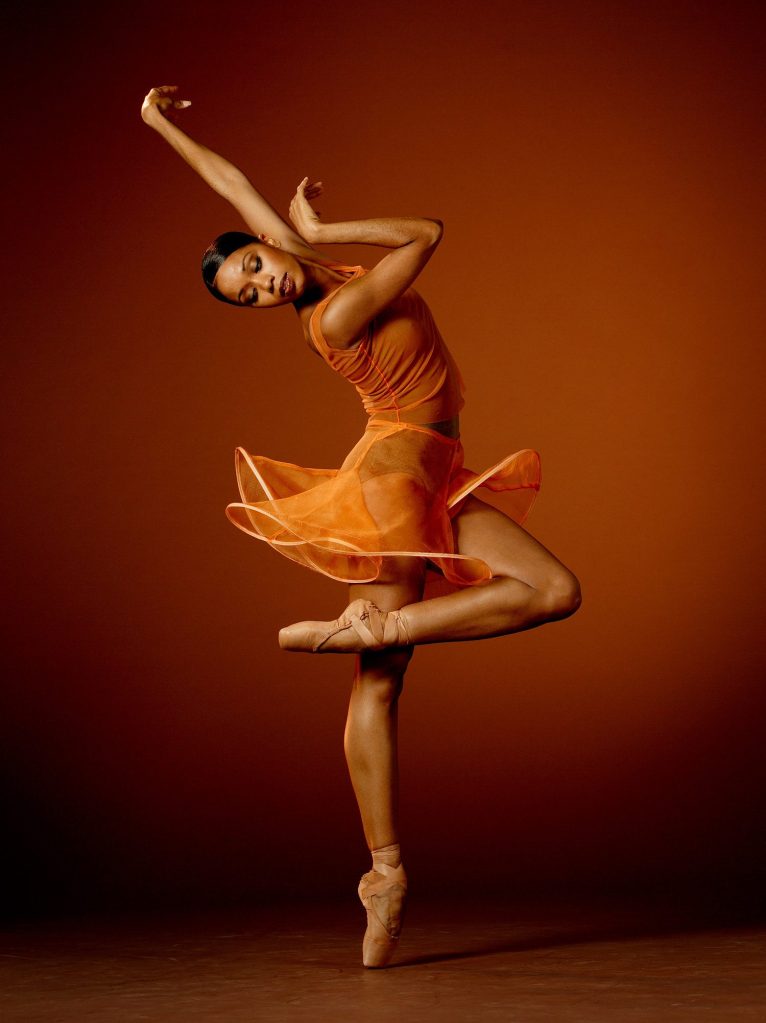
Photography: Alonzo King LINES Ballet | Dancer: Aesha Ash | © Mary Sohl
Alonzo talks a lot about falling in love with the work. Is this outlook on effort something that you pass on to your students?
Has becoming a mother changed your view of dance?
It’s hard for me to say…I’m not a dancing mom. There’s a lot of dancers who dance through their pregnancies and after. I don’t have that experience. Instead, I was a teacher after I became a mom. With that said, it has indeed informed 100% of how I approach adolescence and look at my students. A lot of the kids that I taught at the School of American Ballet were my daughter’s age as I went through the levels. I looked at them in their little leotards, and they seemed so young. But then I’d realized, “Wait a minute. This is not a baby; this kid is my daughter’s age. They are mature.” That realization helped me a lot. I often ask myself today, “How would I talk to my daughter?” before I address one of my students.

Photography: The Swans Dream Project | Aesha Ash with children in Rochester, New York | © Thaler Photography
My kids are older now; my daughter is 13, and she is dealing with so much as a young person in the world today. So when stuff goes on in the classroom, I remind myself, “This is a pre-teen. They are dealing with so much that I don’t see.” Motherhood definitely helped me develop the patience that I have with my students. It also allows me to better connect with them as human beings and individuals. If you have children, you go through things with them. You see their hurts and their trials, and that closeness allows you to connect with that age group in a different way. I don’t think I would have understood my students at this deeper level without having kids of my own.
My daughter also gives me advice on my teaching. She shares examples of positive and negative interactions students have with teachers, and their whys behind those feelings. This informs not only my approach but opens my eyes to how things are perceived by her generation. It doesn’t mean I always take her side, but having the information is always beneficial. I look at my students differently because of her advice.
Now, if I was still dancing, I can imagine that motherhood would give me a different grounding. Once you have children, the things that were so important before suddenly become a little less important. You realize that your kids and your family are the most important things. I think this realization would free a dancer up to be really present in the space. You wouldn’t get as caught up in all the head stuff because you could view dance as simply something that you get to enjoy. Instead of dance being your everything, it would instead be something beautiful that means a lot to you, something that you get to explore and bring your experiences into. It would be part of you, but not the top priority.
One day I would love to jump into a class, without anyone recognizing me, and just explore this glorious art form with the knowledge and experience that I have today. I can only imagine that the trials and tribulations that you go through as a mother must inform your art. It has to add this deeper richness to who you are on that stage because motherhood is both a part of your humanity and the connection that you make with the audience, no matter what it is you’re doing up there.

Description: Aesha Ash and Gonzalo Garica rehearsing Slingerland by Forsythe in the company Morphoses by Christopher Wheeldon
You gave a TEDx Talk on the power and impact of home. How do you define home today?
You mentioned that you learned lessons about home, perfection v.s. play, and authenticity too late. But was it too late?
You’re absolutely right. I really don’t regret anything that I’ve gone through. I have this sense of urgency because of my experiences. That’s why I often find myself speaking to my students in class, because I want to share all that I have learned and remind them to go deeper than the steps. I want my students to know this stuff. I didn’t have this knowledge or freedom. Now I see how important it is and how positively it would have changed my entire career. I would have had a totally different trajectory with these insights. But I learned them exactly when I needed to learn them. Now I strive to pass these valuable lessons on to my students. I want them to learn as soon as they can.
What little, daily decisions do you think can make a difference?
Love these conversations about dance, philosophy, and the human spirit? In addition to these inspirational interviews, LINES Ballet’s performances and education programs reach more than 30,000 people every year. But we need your help. We rely on donors’ generosity to bring these inspirational programs to our community. Donate today!
LINES’ Education Programs’ Auditions
The philosophies that Aesha Ash discusses are woven throughout all of our Education Programs at LINES. Check out the upcoming audition opportunities for our 2024 Summer Program, BFA Program at Dominican University of California, and Training Program. Each year, we travel the country looking for the next generation of artists to train with us in San Francisco. Our transformative pre-professional programs aim to help dancers discover their artists within.
Photography: Alonzo King LINES Ballet | Summer Program | Dancer: Alex Harper | © Manny Crisostomo

 LINESConnected