

For over a decade, LINES Ballet has offered a joint BFA Program with Dominican University of California, with classes in both San Francisco and San Rafael. The curriculum combines the acclaimed training and philosophy of LINES and Alonzo King with Dominican’s comprehensive liberal arts education and social values.
Ahead of audition season, we sat down with alumni Zara Anwar (class of 2020), Héctor Jaime (class of 2021), and Emma Debski (class of 2023) to learn more about their experiences in the program. Zara is currently a dancer with AXIS Dance Company; Emma recently joined PHILADANCO!’s Apprentice Company, DANCO 2, and Héctor dances with Sean Dorsey Dance and founded the company, Xochipilli Dance Company.
Together, we discuss the program’s faculty, emphasis on artistry, and constant call to uncover more. Find out how themes of individuality and intentionality impacted each of these dancers and influence who they are today.
Interview by Erin McKay | Videos edited by Jamie Lyons
How do you think that your training and education in the BFA Program prepared you for the path you are on now?
Why did you decide to attend LINES Ballet’s BFA Program with Dominican University of California?
Zara: I auditioned for several different schools, but what stood out to me with LINES was Alonzo King and his philosophy. I remember seeing a video online of Alonzo talking to students about truth in their dancing. He described this realness and authenticity that I didn’t experience in other places, but it was something I deeply desired in dance. His focus on true presence, and exposing your genuine self through dance, called me to the program.
The class I took for my audition with LINES was unlike any other class I had experienced. Maurya Kerr, a former LINES Ballet company dancer, taught the ballet class. She pushed us to unveil our artistry through the use of expansive port de bras, dynamic musicality, and texture. The space she created invited me to open up even more and explore my artistry in an audition. Maurya wanted us to DANCE.
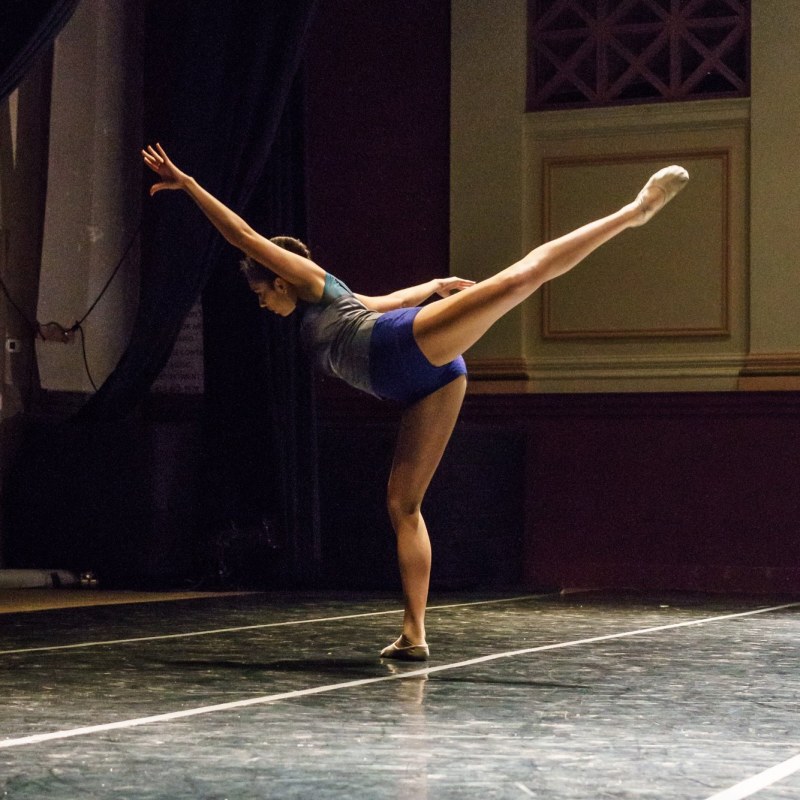
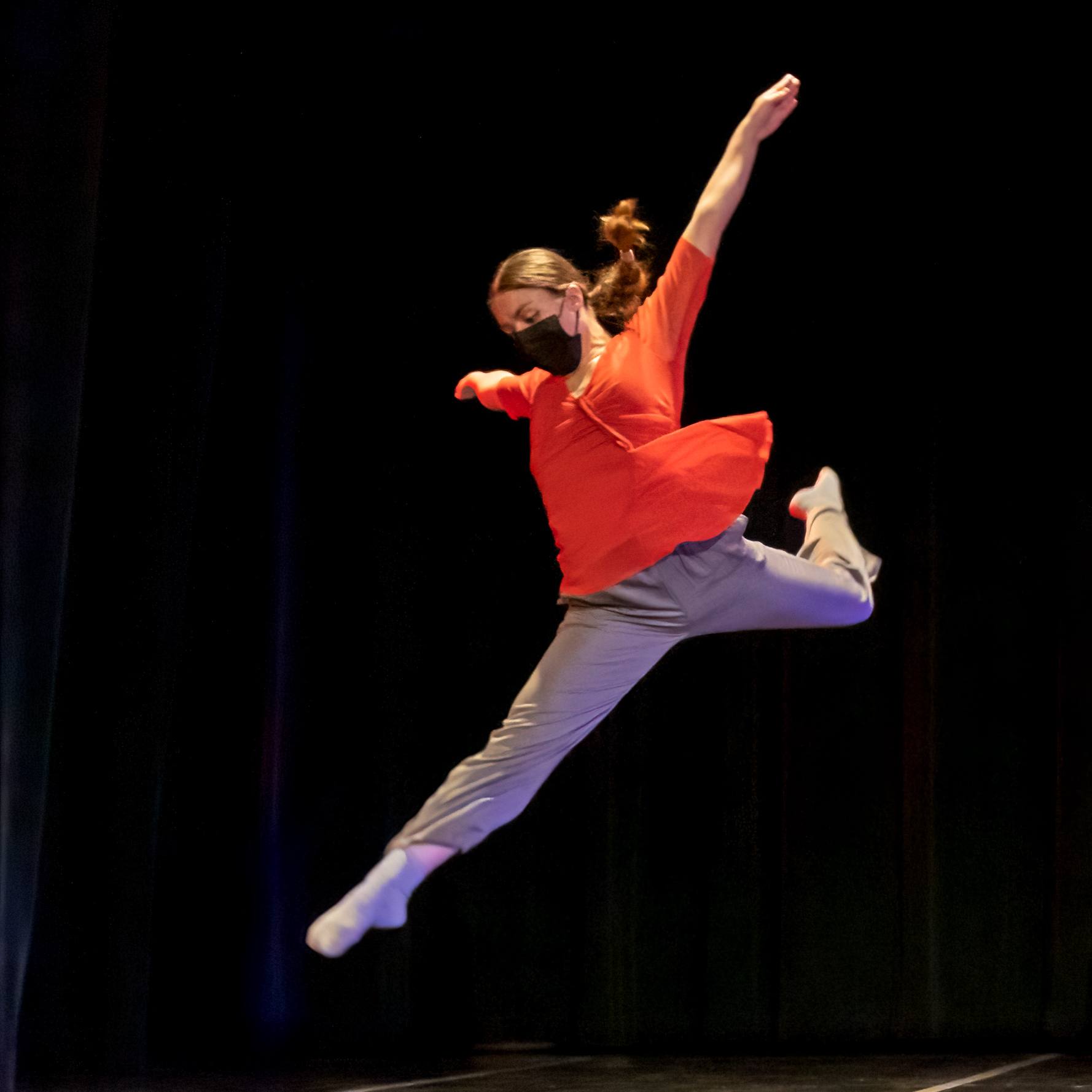
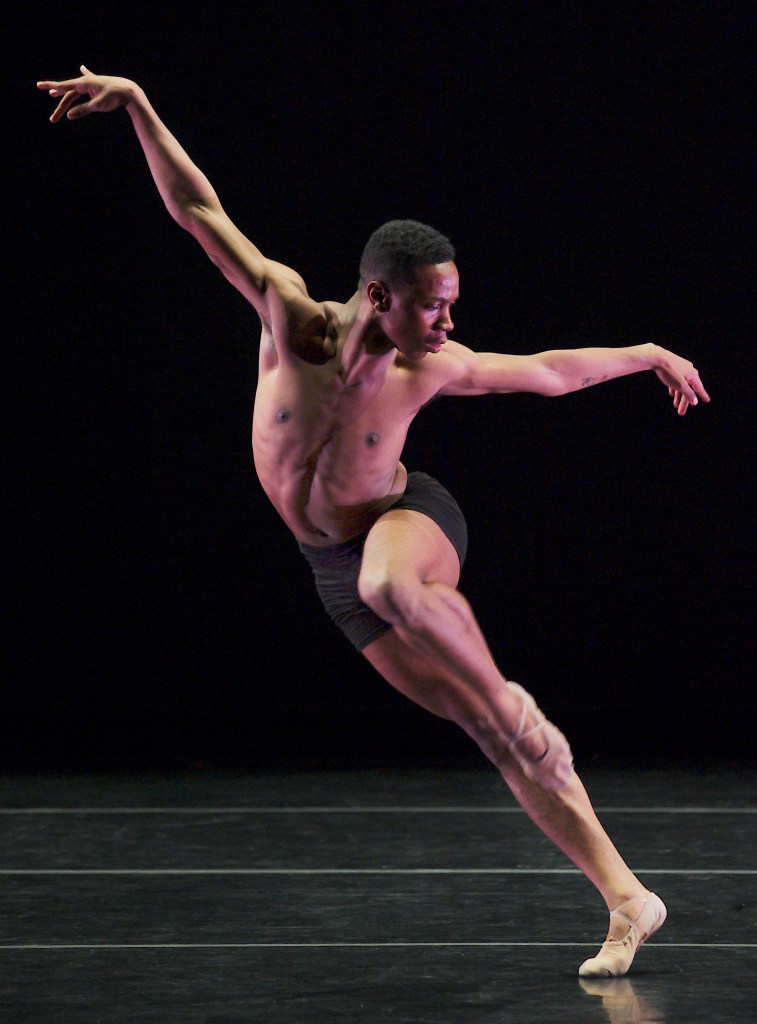
Photography: Alonzo King LINES Ballet | BFA at Dominican | Dancer: Zara Anwar | © Steve Disenhof
Héctor: I was living in Mexicali BC, Mexico and crossing the border every day to go to high school. During my senior year, my plan was to apply to universities in the U.S. in order to end that exhausting journey. Before applying, I met Gregory Dawson, a BFA faculty member and former LINES Ballet company dancer. He introduced me to LINES’ BFA Program at Dominican.
Marina Hotchkiss, the BFA Director, was also willing to teach me the ballet technique within the program. Other schools usually wanted me to have a solid foundation in ballet training, and I only had one or two years of experience. But Marina was really open to me where I was at.
At the time, I didn’t really speak English that well either, and Marina was the nicest person ever. She and all the staff showed me so much patience.
Alonzo encourages dancers to never do something the same way twice. Was this a new idea for you? How did this philosophy affect you throughout the program?
Emma: This reminds me of working with Charles Moulton for sophomore composition during the pandemic. Sophomore comp is a class focused on the art of creating choreography. Charles mentors us throughout that process, encouraging and challenging our artistic voices and decisions. Normally, we would work with him in-person, but during the pandemic, we recorded choreography from our homes to send to him for review. It was super open-ended. He didn’t give us a prompt; he just told us to make dance videos.
After three weeks, Charles gathered us together and said, “Guys, these are great videos, but they all feel like the last ones you sent. You can do whatever you want, so try something you wouldn’t normally think of.” He pushed us to get outside of our comfort zones. He also made it a point to say that our videos represented us simply because we were in them, not because we made decisions that we thought were representative of our style or aesthetic; that made me rethink everything. I thought I was being creative, but really I was sticking to a script that I had made for myself.
Which piece of wisdom or advice impacted you the most throughout your education?
How would you describe LINES’ Training?
Héctor: Besides the academic courses, I felt like the training at LINES was very experimental. Even the ballet classes had explorative elements to them. The teacher’s incorporated their experiences with Alonzo, along with the lessons they’d learned from their long dance careers, into our instruction. They offered us feelings, sensations, and different approaches to apply to our dancing. Their teaching was not repetitive; it was intentional, flexible, and open to constant change. That has always stuck with me.
I was learning the technique at the same time that I was learning LINES’ philosophies though, so it all became a bit blurry to me. It was so much information, and the teachers often spoke about the technique using metaphors, so I found myself asking, “How do you do it?” a lot. The teachers were really supportive of me though. I could ask them to explain a concept in a different way, or speak a bit slower, and they would. They also found new ways to share the information with me, and I really appreciated that. The training was experimental, yes, but the teachers were also open to experimenting with communication.
Zara: LINES really pushed me artistically. I came from a strong technical background, and I’m grateful for that solid foundation. At LINES, I was able to uncover even more of my artistic voice. The BFA Program provided the space and support for me to dive deeper into my artistry and grow in ways I did not anticipate.

Photography: Zara Anwar | © Rob Kunkle
What was your favorite academic class?
Emma: The class I learned the most in was dance history with Molly Rogers. Her class was probably one of the hardest, most demanding, classes I’ve ever taken, but it amazed me. Since she was teaching to a room full of dancers, she decided to incorporate movement into the class. And we weren’t just learning some choreography; no, she really got us up and moving. I remember so much from dance history, and all of what I know is attached to movement.
Her approach also got me out of my comfort zone. I felt like I had academics down: I sat and took in the information; that was it. But dance history challenged me to be actively and kinesthetically involved in an academic setting. I know all dance programs offer dance history, but I don’t know if anyone else experiences it quite like we did at Dominican.
Zara: Dr. Gay Lynch’s course, Dance and Spiritual Expression: Rhythmic Bodily Movement and the Religious Life, was hands down my favorite. Yet, all her classes were incredibly meaningful and enlightening (including her classes on forgiveness)! Together, we looked at how dance is sacred and what a body knows. We read articles by writers who focused on the connection between dance, spirituality, and religion. There truly is so much wisdom in our bodies, and it was beautiful to study.
Gay also had us journal, share reflections, and discuss openly. I don’t think I would have had the opportunity to take a class like Gay’s anywhere else. I heard that she’s off right now, but I hope she comes back so students can continue to experience her as a human and receive what she teaches.
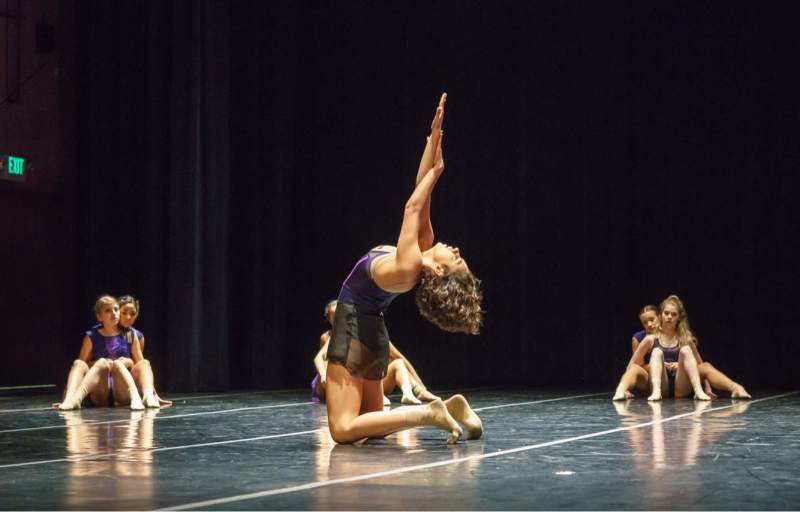
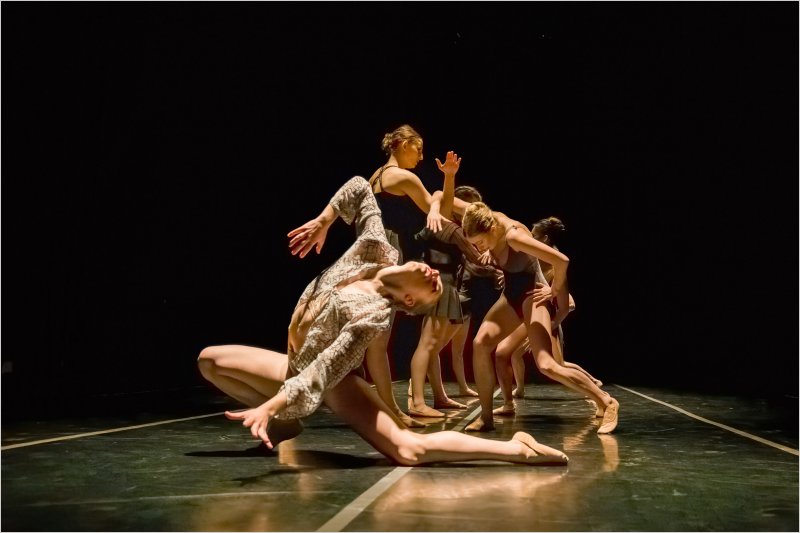
Photography: Alonzo King LINES Ballet | BFA at Dominican | Dancers: Zara Anwar, Anouk Otsea, Gabriela Mendez, Ale Preciado, and Marie Finely | © Steve Disenhof
Héctor: I took a class for my ethics minor with Professor Henry Shreibman. He was an amazing teacher who made space for many group discussions. He prompted us to share our experiences from around the world with each other along with how we managed them. It was really interesting to see how culture, your upbringing, religion, and other factors change the way that you see the world. People can make different choices than you just because of what they believe in. That impacted me, especially because it is applicable to dance. Not everyone experiences dance in the same way, and that is just a fact.
Shreibman was also one of the first people to ask me what my pronouns were, along with other questions about my identity. He was a really cool professor and colleague.
Every year, the seniors create their own dances from start to finish. These are known as senior projects. How was your experience creating your piece, and what did you learn about leadership and/or yourself during the process?
Héctor: It was beneficial for me to be in charge of a room of people. I tried to implement what my teachers at LINES taught me along the way:
- Be as professional as possible with yourself and others.
- Don’t just give the material; be intentional with what you’re asking for.
- Be as respectful as possible with your dancers’ bodies and their choices.
- And don’t be judgmental.
I think I gained that lesson about judgment especially throughout my four years. My dancing never felt judged by someone at the front of the room, so it was really beautiful for me to lead from an accepting place as well, prompted by my teachers’ examples. I also got these magnificent movements out of my cast as a result; it was an amazing experience.
Now I have my own company, Xochipilli Dance Company. We present work and are featured in different festivals around the Bay Area. If I hadn’t had that experience as a choreographer during my senior year, I think I would have been too intimidated to start my own company. Now, I feel more confident approaching collaborators that I want to work with, and I’m able to communicate efficiently with them.

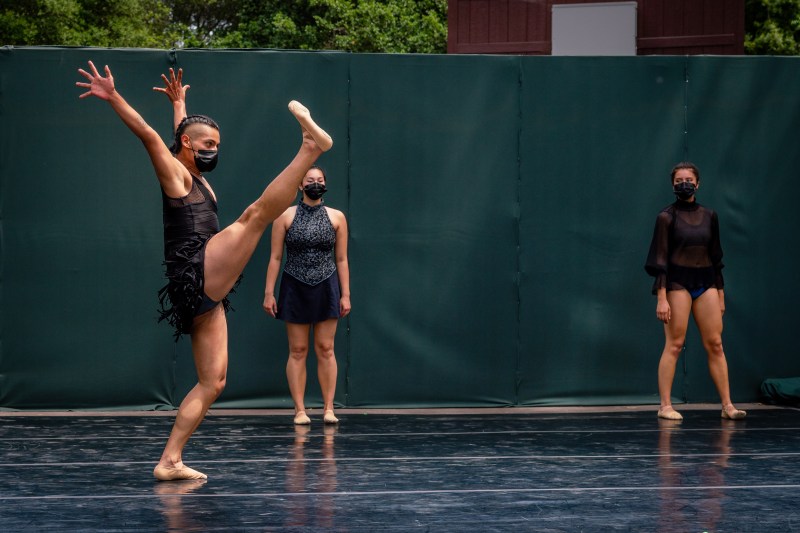
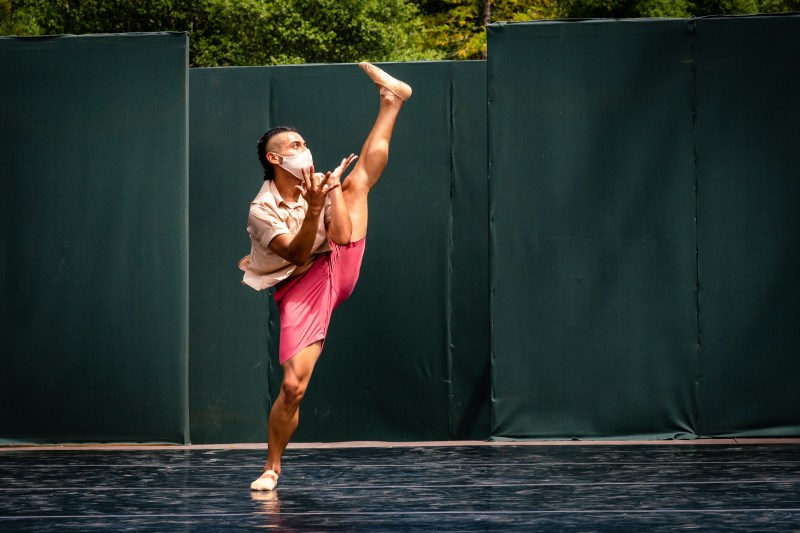
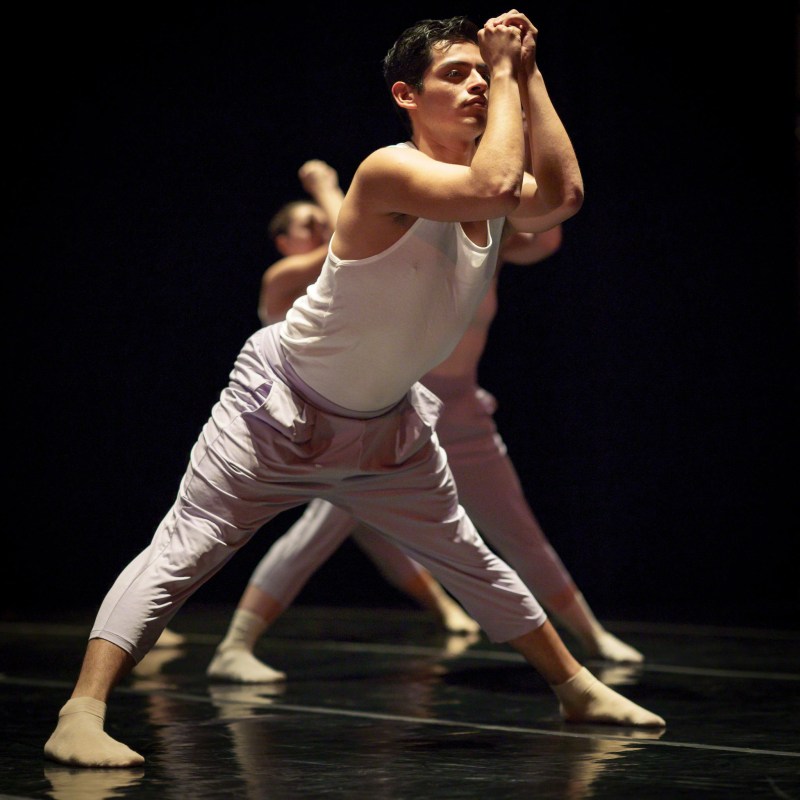
Photography: Still image from Héctor Jaime’s Senior Project, The Empress:La Emperatriz
Emma: I knew I wanted to be in control of every aspect of my piece, from start to finish. I even designed and sewed my costumes. But halfway through, I broke my ankle, and everything got flipped over.
Before the injury, I had a good habit of coming up with the choreography a week before my next rehearsal. I’d learn the movement on my body, try it out with counts in the music, and then teach it to the dancers. Of course, I made edits as needed, but I wanted to show up prepared with content; I relied on that. After my injury, I didn’t feel like the choreographer anymore, because I couldn’t show anything. It was really hard to build up the confidence I needed to keep going.
To help, I tried to tap into an experience I had during the pandemic with Alonzo. He taught us choreography over Zoom using only his words. I was blown away! We picked up the movement so easily because he was clear and precise.
With my injury, I knew I would need to communicate effectively, like Alonzo, while also leaving things up to chance a little more. I was worried that I would let my friends down, but it ended up being one of the best experiences I’ve ever had. I learned so much because I couldn’t dance. Instead, I was forced to rely on my imagination and clarity.

As you approached your senior year, you commissioned a choreographer to create a solo for you. How did you select your choreographer, and what did you learn during the process?
How were you impacted by your workshops with Alonzo?
Emma: Alonzo talked to us about having majesty while we danced. I kind of struggled with confidence during all four years of the program, and this idea of majesty helped me connect to it. Alonzo specifically told us to have a majestic fifth position, but the best part about Alonzo is that the fifth also needed to be turned out. LINES is a very philosophical place, but the technique needs to be at the same level of excellence as the intention behind the movement.
After any class or workshop with Alonzo, my body and mind were extremely tired. They were both competing to get this energy out of me, and I wanted to take in as much as I could.
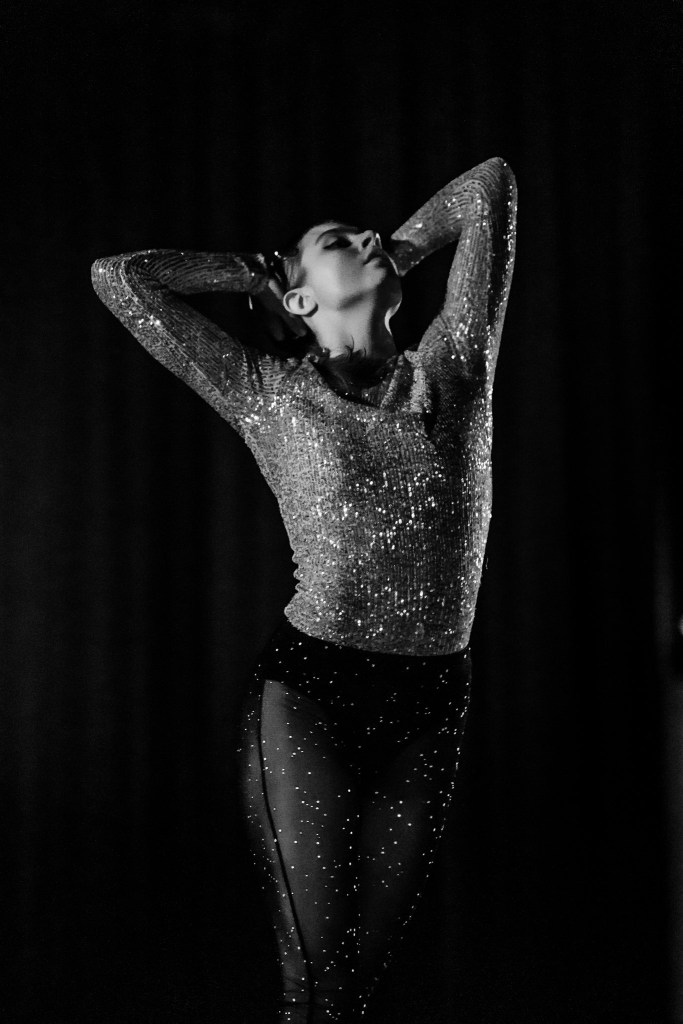
Photography: Alonzo King LINES Ballet | BFA at Dominican | Dancer: Emma Debski | © Doug Kaye
Zara: Each class with Alonzo taught me a lot about myself and how I approach dance. But, the week-long workshop that I had with him during my senior year was definitely the best! By the end of the week, my class had grown even closer. We shared this special camaraderie and dynamic, and I think Alonzo recognized our energy. We ate up everything he gave us, and the effort we put in is what we got out. It was a back and forth conversation with Alonzo, and it was fierce! It was a challenge, yes, but an exhilarating one.
We did some funny things together too. At the end of the week, we ended up using a ball as a prop to play a sort of movement game in a circle. Alonzo continued to show us just how many possibilities there are, including ways we can push our ideas and ourselves through movement, dance, and creativity.
Banner Photography: Alonzo King LINES Ballet | BFA at Dominican | Dancers: Zara Anwar, Héctor Jamie, and Emma Debski | © Steve Disenhof, Rob Kunkle, and Queeringbeauty
Love these conversations about dance, philosophy, and education? In addition to these inspirational interviews, LINES Ballet’s performances and education programs reach more than 30,000 people every year. But we need your help. We rely on donors’ generosity to bring these inspirational programs to our community. Donate today!
BFA AUDITIONS
Applications for our BFA at Dominican are open! We offer serious students an unequaled opportunity to discover themselves as artists and as human beings—and to gain an excellent artistic and academic education along the way. There are three steps to apply for our BFA Program: an academic application (reviewed on a rolling basis), an artistic application (due on March 1, 2024), and an audition (also to be completed by March 1). We are thrilled to welcome inspiring, prospective students from around the world to apply for our four-year program this audition season!
Photography: Alonzo King LINES Ballet | BFA at Dominican | Dancers: Nikki and Juan Ruiz | © Steve Disenhof

SUMMER AND TRAINING PROGRAM
In addition to our BFA at Dominican, we also have a pre-professional, two-year Training Program for avid dancers ages 18–24 and a renowned Summer Program for dancers ages 11–25. Auditions for both of these transformative programs are open for registration.
Photography: Alonzo King LINES Ballet | Summer Program | © Unknown
 LINESConnected