
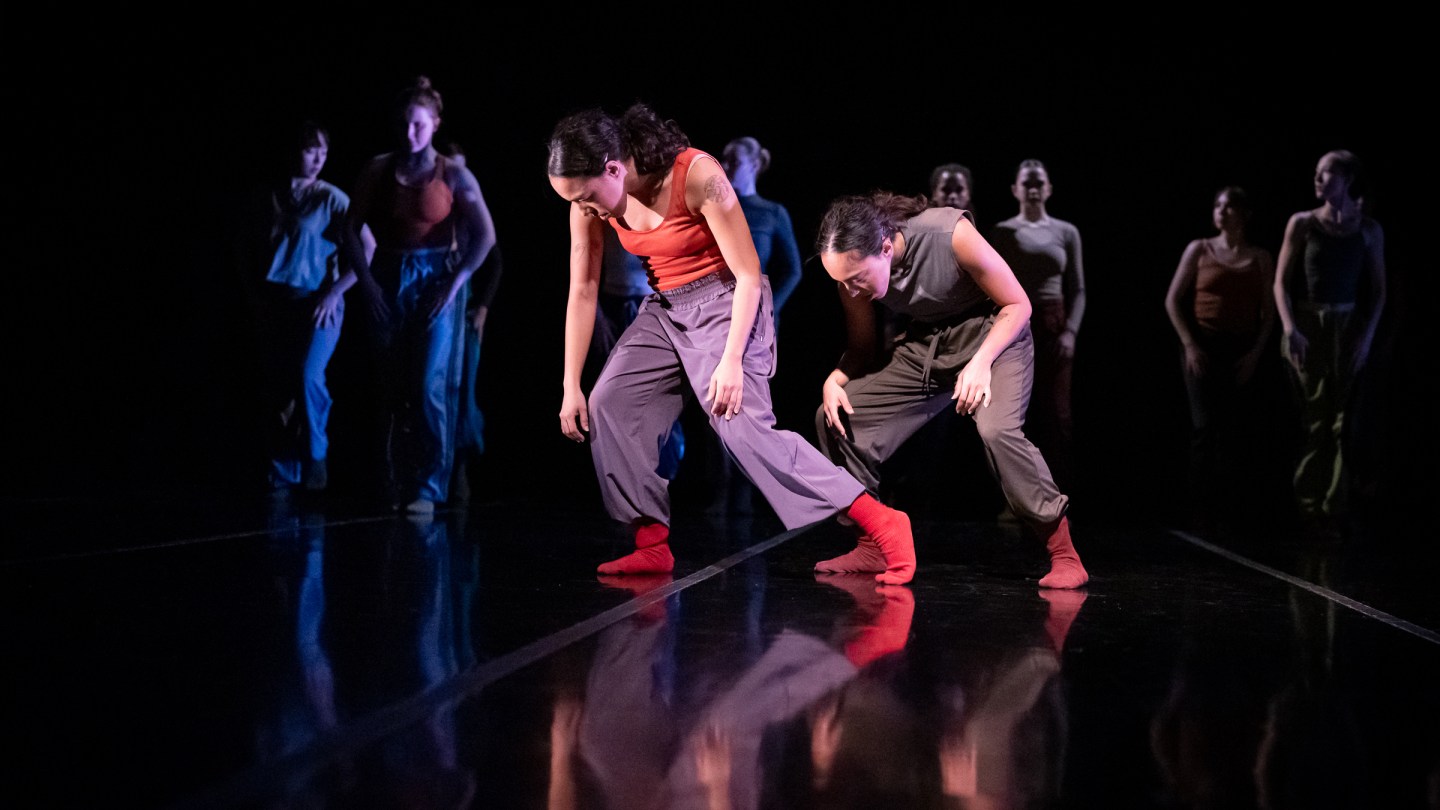
In honor of the LINES Training Program audition season, we sat down to talk with sisters Giovana and Giulia Sales, recent alumni who joined us from Brazil. During the final weeks of their last semester, we discussed everything from confidence to individuality as well as their shared dream of creating a company—one that uplifts their community by making dance more accessible to people of different body types, income levels, and experiences. Learn more about what inspires them, and why LINES holds a special place in their hearts.
Interested in joining our Training Program, or know someone who might be? Learn more about upcoming audition opportunities (including our virtual audition on March 10) on the program’s Audition Page.
Interview by Erin McKay | Videos by Jamie Lyons
What have you learned during LINES’ Training Program that you want to continue exploring after you leave?
What was your first experience with LINES?
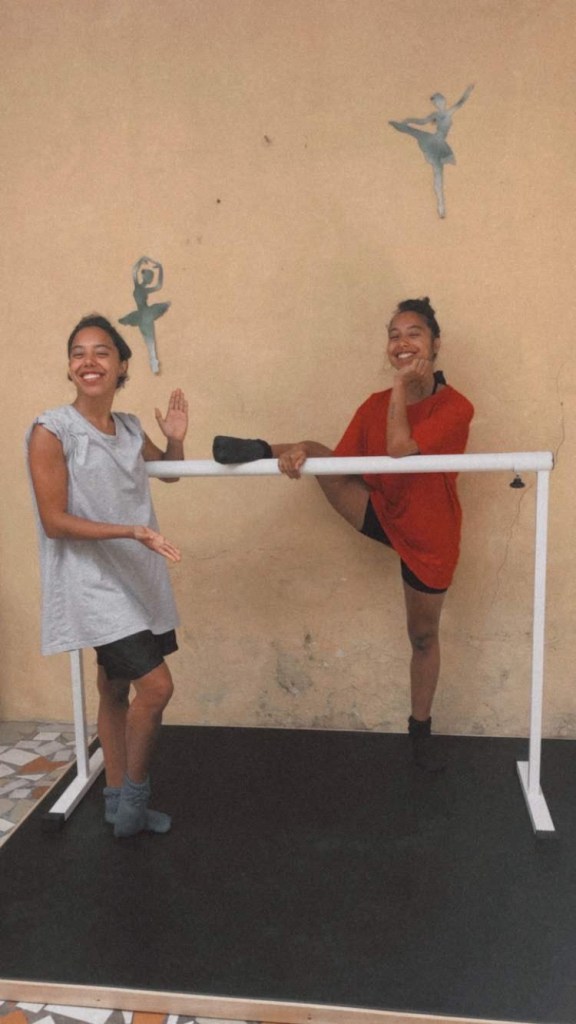
Giovana: We attended an online workshop with LINES during the pandemic. It was geared toward our time zone in Latin America.
Giulia: It was really fun. We did GYROKINESIS®, LINES’ Repertory with former company dancer Keelan Whitmore (which was really difficult), and ballet.
We usually prefer contemporary dance to ballet, but the ballet class we took with LINES was really different from our normal one in Brazil. We were used to ballet being very square, but at LINES, we could mix contemporary elements into the ballet technique, which was like a dream. I did plies with my whole body!
Giovana: And I could wear clothes I actually liked during ballet with LINES! It was weird at first, but it helped me feel good within myself.
Did that online experience lead you to join the Training Program?
Giulia: Yes, that virtual workshop also doubled as an audition for the Training Program, and we got a scholarship!
Giovana: During the pandemic, we didn’t have any concrete plans for our future, and we definitely didn’t know it was possible for both of us to get a scholarship offer! The Training Program Director Karah Abiog even wrote us a really nice email to share the news.
Giulia: Karah said that we were seen as individuals. This was very meaningful to us, because people often focus on the fact that we are twins, but we have value as artists separately too. It was a big moment in our lives. It was a miracle.
You worked with Alonzo for a week during the semester. What did you learn from him?
What are the differences between your first and second years in the program?
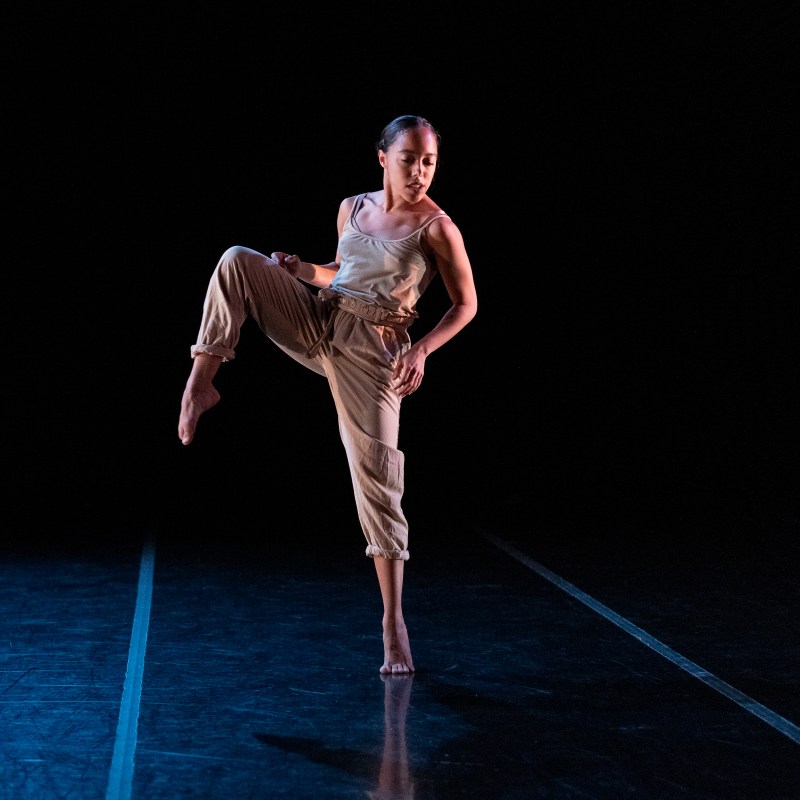
Giovana: I think what changed is our mindset. I don’t want to be a student anymore. Everybody wants to be a professional, including me. This goal influences the way we take class in our second year.
Giulia: In the first year, I think we were very scared, but now, we can share more, learn more, and teach more. I have also enjoyed watching my peers dance more. They have grown up alongside us, and they are so talented. LINES has this philosophy about inviting different bodies and minds into dance, so everyone around me is being themselves, and I love it.
Our teachers are also very picky with corrections this year. They want to give us everything they have, and we want to learn it all. It’s hard knowing that we’re almost done in LINES’ Training Program, so we need to enjoy everything that we have here.
Photography: LINES Ballet Training Program | Dancer: Giovana Sales | © Eric Raeber
Do you have a favorite teacher in the program?
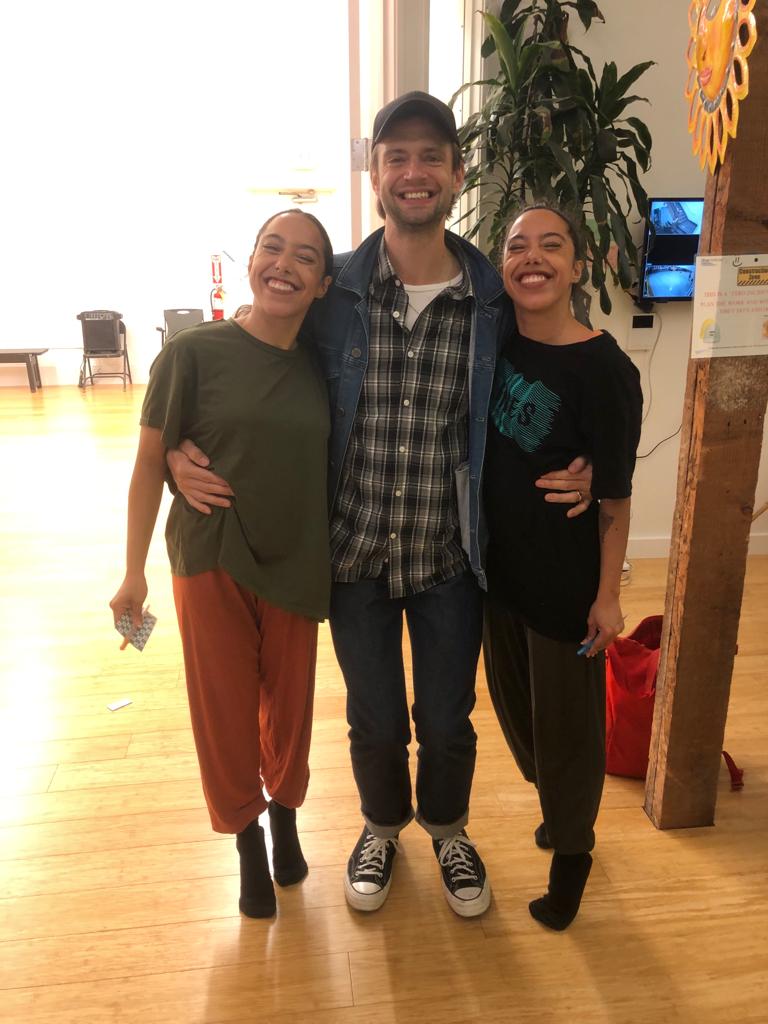
Giulia: In addition to Christian Burns, Brett Conway contributed greatly to our development in the Training Program. His movement was the first thing we saw while dancing online from Brazil. Then, when we arrived in San Francisco for the in-person program, Brett trusted our work and had us perform his choreography. It was an emotional moment for us, as if a dream had really come true, and Brett is still an important supporter of our dancing today.
Giovana: I would also add the importance of Maurya Kerr and Sandra Chinn in our evolution. Before the Training Program, we had never had a black ballet teacher before. So learning in the classroom with Maurya Kerr, who is such an incredible person and dancer, is inspiring. It’s very liberating to see yourself in your teacher.
And Sandra Chinn was the instructor who never let me give up, even when I was lost and unmotivated in class. I will never forget when I did a ballet combination correctly for the first time, and she shouted, “YES GIOVANA” with a huge smile on her face. I will picture that moment in my head forever.
Giulia, you had an injury during your first year of the Training Program. How did you navigate through that?
Giulia: The teachers at LINES always tell us to mark our port de bras (or arm movements) to better learn the combinations. But while I was injured, I moved my arms just to try and feel more alive. I was really stressed and sad during that time. I had knee and foot injuries, plus my upper leg was really tight. I tried to think positively, but it wasn’t easy.
To stay engaged, I wrote notes during my dance classes, and I figured out that I could learn a lot just by observing people. We often think that if we keep moving, we will produce things effectively, but this is not always true; we need breaks so our brains can process all the information we consume. My injuries forced me to take a break.
My time off also allowed me to feel better about my technique, not in the moment, but afterwards. I noticed corrections for myself while watching my peers, like how to better move my arms. My friends were an inspiration to me during that time.
To aid in my recovery, I also worked out a lot at the gym in Brazil before I came to LINES. I highly recommend it; it’s perfect for our bodies as dancers! The past generation didn’t know the value of strength training, but now we do, so we need to use it. If we strengthen our bodies, we will dance much longer and get better overall as a result.
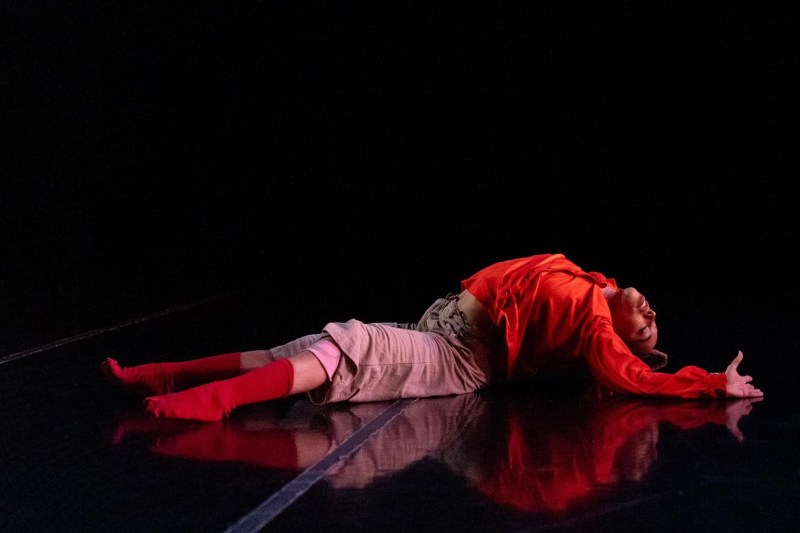
Photography: LINES Ballet Training Program | Dancer: Giulia Sales | © Eric Raeber
What are your dreams for the future?
Giulia: Our biggest long-term goal is to create our own company. I have a feeling that I need to do this, not only for myself, but for Brazilian dancers too. I want to work with a lot of different people, bodies, and kinds of movers. We are constantly improvising and making up movement in front of the mirror, so the idea of researching our creations on other people seems fulfilling. The Batsheva Dance Company is my inspiration.
We are also inspired by our family. Our grandma was really important to the community because she helped in the church, and my mother is a social worker in Brazil. They both showed us how important it is to have the support of groups and other people to get through life’s adversities. No one can achieve anything alone, so our dream is to continue helping people through dance, both on stage and off.
Our short-term goal is to dance with as many people as possible. We are curious, playful artists, and we do not want to stay in our comfort zones. Instead, we are like blank pieces of paper, ready to try out different movement languages and proposals.
Giovana: For me, I always wanted to be a professional dancer, but during the pandemic I took an interest in choreography. I started creating more while in quarantine, and I felt good about the work. I was also inspired by LINES’ philosophy, which is very beautiful and difficult to find in dance, even today.
Overall, I want to continue working on building my technique, with the same feeling of freedom that we have here in LINES’ Training Program, while also integrating my own body language and Brazilian experiences into movement. After all, Giulia and I don’t want to distance ourselves from our roots. That’s why we aim toward the difficult task of bringing all of our experiences and training together.
Before, our goals seemed like distant dreams, but after a lot of hard work and achievement, I saw that everything is possible. That’s what happened for us through LINES’ Training Program; I now know that all of my goals can become realities.
Does your family dance?
Giovana: We were born into Brazilian traditional dance, and our family played samba, so the rhythm was always present in our lives. My mother also loved musicals, especially older ones, so sometimes she would imitate Fred Astaire’s dance moves around the house; it was incredible.
My father was a soccer player when he was a teenager. He always liked sports, and he is still very physically active to this day. Both of our parents strongly influenced the way we see dance in our lives. They were always moving, whether within sports or within the rhythm of dance and music, and I feel lucky to have them as an inspiration.

Giulia: And Brazil itself has a big culture of dance and music, so this helped us see dance as a way of life. In a professional sense, we saw our cousin dancing on a stage. I can still remember the dresses and the lights…I fell in love with dance during that show. Then, later on, we actually took class with our cousin’s teacher; it meant a lot to us to share this connection with her.
Do you have any other dance-related memories from childhood that stand out?
Giovana: One memory that comes to mind was from a bus ride with our mom. Giulia was crying, saying “I want to be a dancer,” over and over again. Our mom responded by looking right at her and confidently saying, “Okay, you will be a dancer.”
Giulia: Yes I remember that too. I was crying because I believed that we were not the perfect body type for dance. We are short, but I wanted to be a dancer regardless, and a good dancer at that, and our mom supported us.
Giovana: Yes, our strength comes from our family. We are from a poor neighborhood in Brazil, and our family taught us how to pursue our dreams. When you don’t have a lot of money or opportunities, you need to create your own opportunities. This helped us gain strength. It’s not good, but it’s life.
In what other ways has your mom impacted who you are?
Giovana: Our mom is present for us all day.
Giulia: Like all day! She is such a positive person, and she always wants to see us happy. But we are human, and we get tired and sad. As our mother, she doesn’t want to see us down though, so she does everything she can to motivate us, just like our father does.
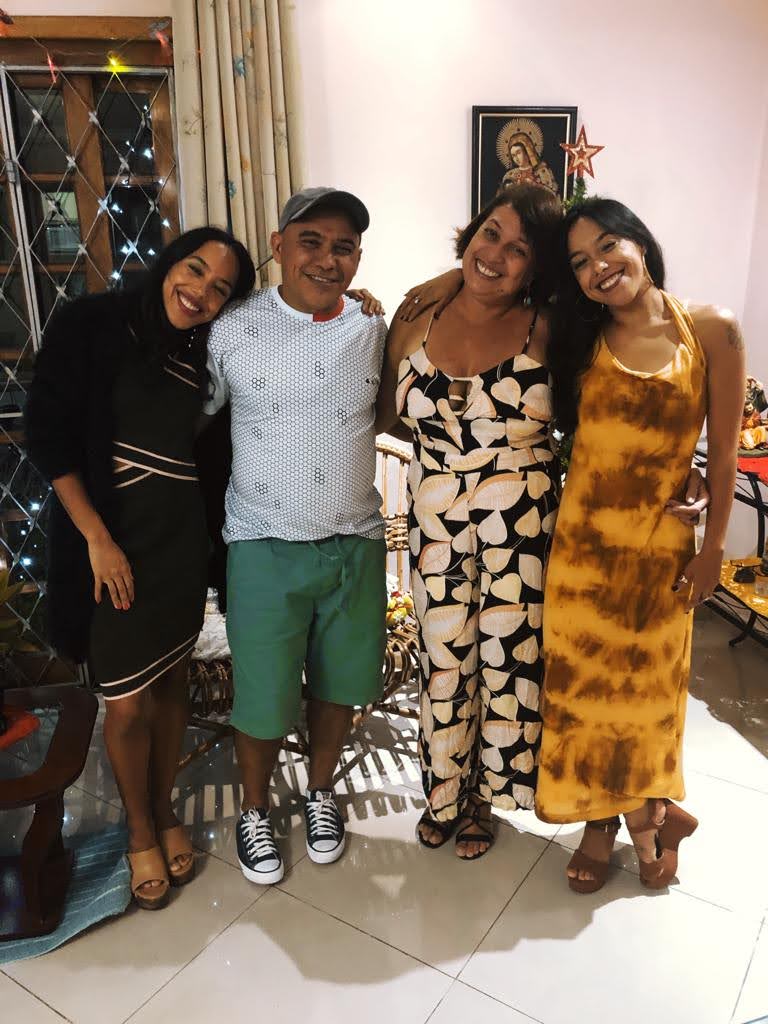
There was a time recently though where I was crying on the phone, and she really listened to me. My mom was there for me in the way I needed that day, and she knew exactly what to say to make me feel better. She wants to see me become the person I aim to be, so she fights for us all day. We are very spiritual people, and we have a lot of faith, so I’m sure that while we are dancing here, our mom is in tune and always connected with us from Brazil.
Giovana: Coming to LINES was a transition for us in more ways than one. In Brazil, Giulia and I were always together, and here, we had to separate. We had to take different classes and understand each other better. This was very difficult for us and our mother. She is the only person who knows how we felt during this process, and despite knowing us very well, it was still difficult for her to see us separately as individuals. After all, we didn’t even know who we were apart from one another; we are learning about ourselves every day here.
Our mom supported us throughout this transition though. I had many self-confidence crises, but my mom knows me like no one else, so she always had the right words to help motivate me. I couldn’t be the person I am without her. My mother is my best friend.
How have you changed over the past two years?
Giulia: As a first year, you don’t have a lot of experience. You don’t know what you are going to do next, and you are always lost. But I know where I am now, and it’s very nice to see this transition within myself. Overall, I feel like I have a better understanding of LINES’ philosophies, a greater sense of independence and autonomy, and all the necessary mechanisms to achieve my artistic and professional goals.
Giovana: I had to be creative in many ways to survive the training. At first, it was scary, but now I’m excited to see how I will reinvent myself by the end of the Training Program.
Also, my English wasn’t good in my first year. I like to talk, but I didn’t know how. So instead I got to know my peers through movement. Conversations through dance were different, but still nice. I didn’t know how to say, “Hi! How are you? How was your day?” with words. So I said, “Hey!” through my dancing.
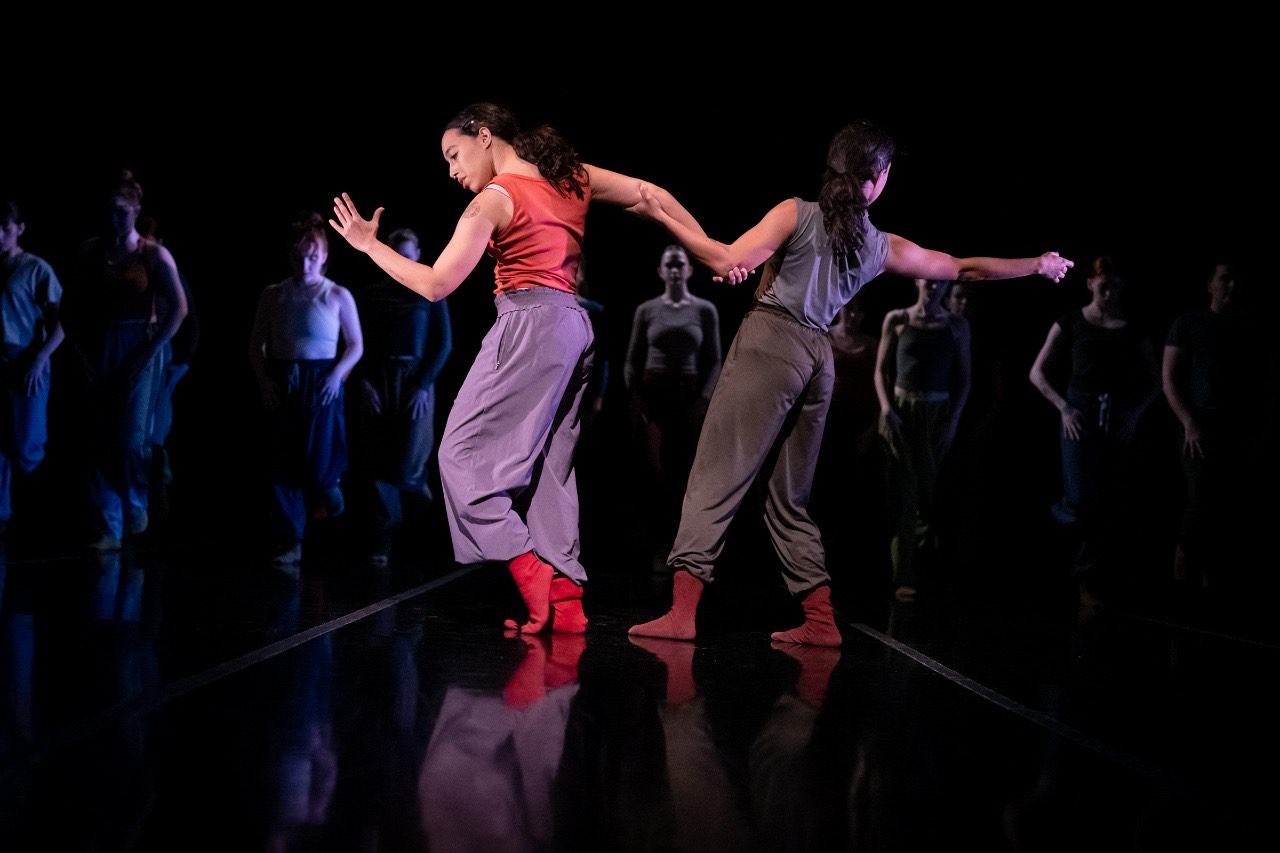
Photography: LINES Ballet Training Program | Dancers: Giovana and Giulia Sales | © Eric Raeber
Why do you dance today?
Banner Photography: LINES Ballet Training Program | Dancers: Giovana and Giulia Sales | © Eric Raeber
Love these conversations about dance, philosophy, and education? In addition to these inspirational interviews, LINES Ballet’s performances and education programs reach more than 30,000 people every year. But we need your help. We rely on donors’ generosity to bring these inspirational programs to our community. Donate today!
TRAINING PROGRAM
Our Training Program is a full-time, two-year professional experience for avid movers ages 18–24. Each year consists of two semesters of instruction, during which time dancers work with a world-class faculty, including former and current LINES Ballet company members. Our program aims to cultivate intelligent, adept dance artists through fostering independent thinking, fearless investigation, and personal discovery.
Photography: Alonzo King LINES Ballet | Training Program | © Eric Raeber

SUMMER AND BFA PROGRAM
In addition to our Training Program, we also offer a four-year BFA Program at Dominican University of California and a renowned Summer Program for dancers ages 11–25. Auditions for both of these transformative programs are open for registration.
Photography: Alonzo King LINES Ballet | BFA at Dominician | © Doug Kaye

 LINESConnected